
Why Take Men’s Therapy Outdoors? The Value of Walk-and-Talk Therapy
AR
Adam Ryan
23 November 2026
Why a Walk Can Feel Easier Than a Therapy Room
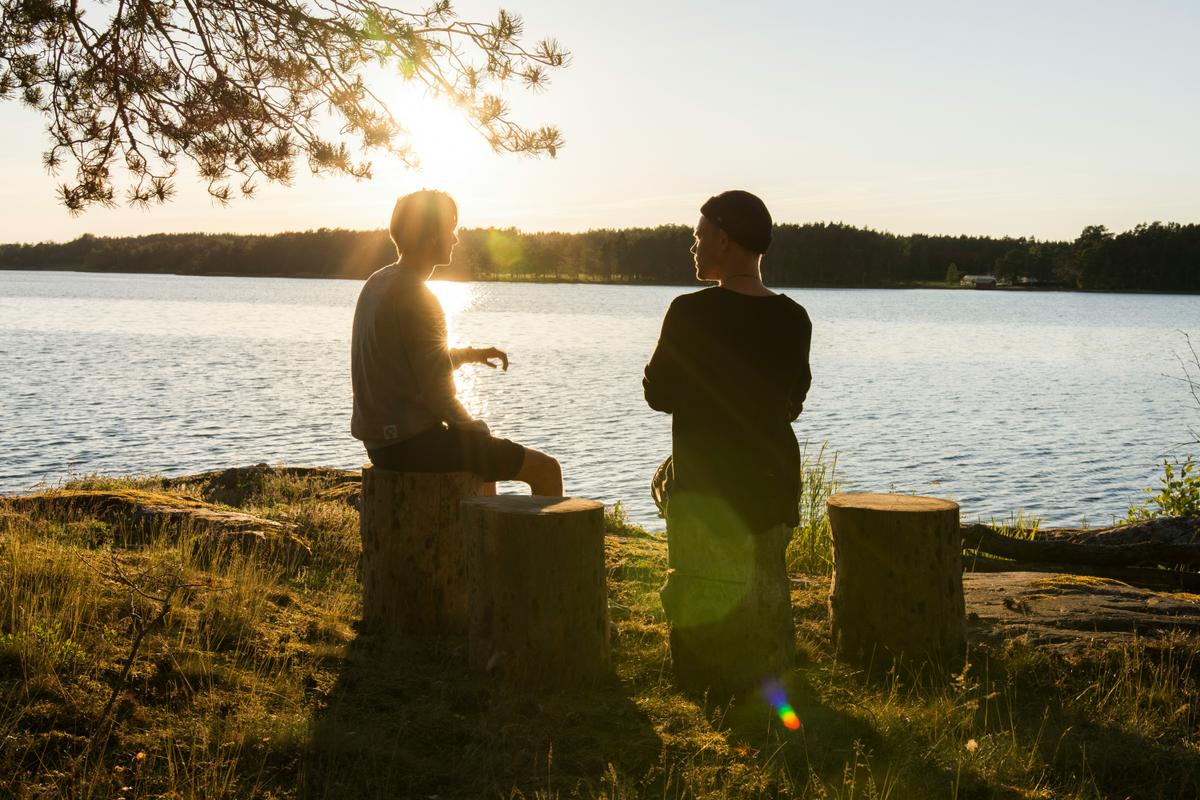
There’s a pattern I notice constantly: men who would never in a hundred years book themselves into a room to sit opposite a stranger and talk about their feelings will, without much persuading at all, agree to a walk. Something about “let’s go for a walk and talk it through” lands as reasonable in a way “let’s sit down and discuss your emotional state” simply doesn’t, for a great many men I’ve worked with. I don’t think that’s coincidence, and I don’t think it’s superficial either. I think it’s sitting on top of something much older.
Start with the practical barrier. Traditional counselling asks a lot of a person before a single word gets said: book an appointment, sit in a waiting room under a sign that as good as announces why you’re there, walk into a small room, sit down opposite a stranger, hold eye contact, and speak. For many men, raised on a fairly consistent cultural diet that feelings are private property, best kept contained, and that needing help is adjacent to weakness, that sequence of small exposures can be enough to stop the whole thing before it starts.
But move that same sequence of events, that same conversation outdoors, side by side rather than face to face, moving forward rather than sitting still, and something about the threshold drops. You’re not on display. There’s somewhere else to look. The conversation can arrive sideways rather than head-on. It isn’t a trick - it’s simply meeting people where the door is actually open, rather than insisting they come in through the one that’s “stuck.”
The Older Story of Men Seeking Change in Nature
But there’s a second, older thread here, and it’s the one I find more interesting: the idea of retreat.
Long before wellness retreats and mindfulness weekends, going into the wild alone or with other men to be changed by the experience is one of the oldest stories we tell about becoming a man. Vision quests in various Indigenous traditions across the Americas; the wilderness sojourns that mark turning points for prophets and holy men across multiple religious traditions; knights riding out into forests in medieval romance, not to fight anything in particular so much as to be tested by the unknown; even the modern resurgence of this idea in the mythopoetic men’s movement of the late twentieth century, which explicitly went looking in myth and folklore for a wild man archetype it felt modern masculinity had lost touch with. Nature, in story after story, is where a man is sent to find out who he actually is, away from the performances required of him everywhere else.
When the Wilderness Becomes a Test of Toughness
There’s something valuable being reached for there. But I don’t think we can borrow that story uncritically, and I think it’s worth being honest about why.
Look closely at a lot of these narratives and you’ll find nature cast not as companion but as adversary - something to be conquered, endured, mastered, in order to prove yourself against it. That version of the story tends to produce a very particular, and pretty limited, model of manhood: stoic, self-reliant to the point of isolation, allergic to needing anyone, measuring its own worth by how much it can withstand alone. It’s the same story, really, whether it’s dressed up as ancient myth or as a survival show on television.
And the retreat-into-solitude version carries its own risk too. Plenty of men have gone off alone into the woods, or the metaphorical woods of silence and self-containment, and come back having processed nothing at all, just further entrenched in whatever they went there to escape. Some of this history, if we’re honest, has been used to justify exactly the kind of emotional shutdown that brings men into my consulting room, or my local wood, in the first place.
A Different Kind of Retreat: Moving Together
So the version I’m interested in offering is a deliberate departure from that one, while keeping what’s genuinely useful underneath it.
Not conquest, but company: we’re not out there to master the landscape, we’re moving through it together, and there’s something quietly levelling about weather neither of us controls and terrain neither of us is above.
Not solitary retreat, but shared retreat: you’re not sent off alone to “sort yourself out” and report back once you’ve toughened up. Someone is walking beside you the entire way, precisely so the old, isolating version of this story doesn’t get to repeat itself.
And rather than nature as a stage on which to prove your toughness, I’d rather it be somewhere you’re allowed to be moved, unsettled, even smallened a little by something larger than you - because in my experience it’s that surrender to the bigger picture (of our emotions, of our lives and the world around us), not any display of strength, that tends to loosen the grip of shame and let something more honest through.
A Place to Ask What Being a Man Means to You
This is really the same question we keep circling back to in the men’s work I do: not “what is a man supposed to be,” but a much more open, much less settled question - what does it actually mean to be a man, for you, once the old performances stop being required? Nature doesn’t answer that question for anyone. But it’s a remarkably good place to be finally allowed to ask it.
Adam Ryan is a BACP-registered counsellor offering walk-and-talk and outdoor therapy in Birmingham and Solihull, alongside online and remote counselling across the UK. He works primarily with men aged 25 and over, supporting clients with anxiety, depression, low self-esteem, burnout and addiction, as well as those simply feeling disconnected from themselves or their lives. Sessions are held outdoors at Clowes Wood and Highbury Park, or remotely by video or phone. To book a free consultation, get in touch via www.adamryantherapy.co.uk.
Keep reading

Article · Mental health
Gender Expectations, Masculinity and Emotional Suppression: Unlearning Outdated Beliefs

Article · Mental health