Chris (00:01)
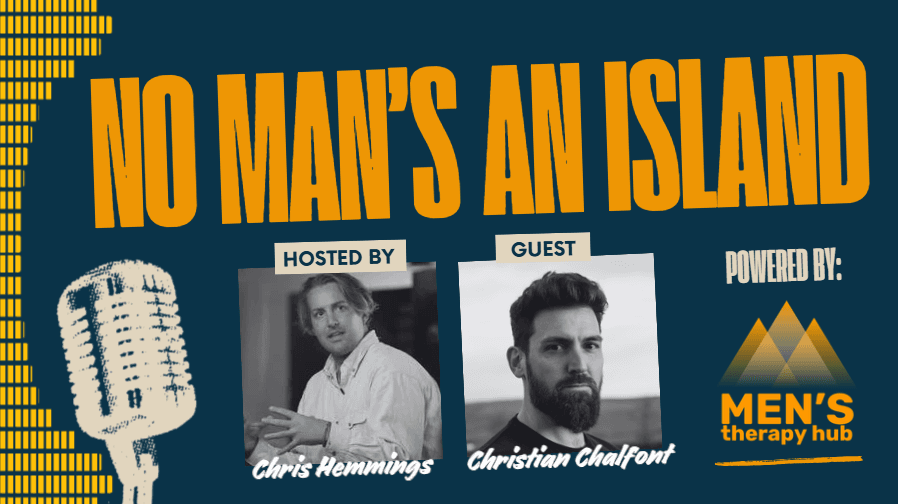
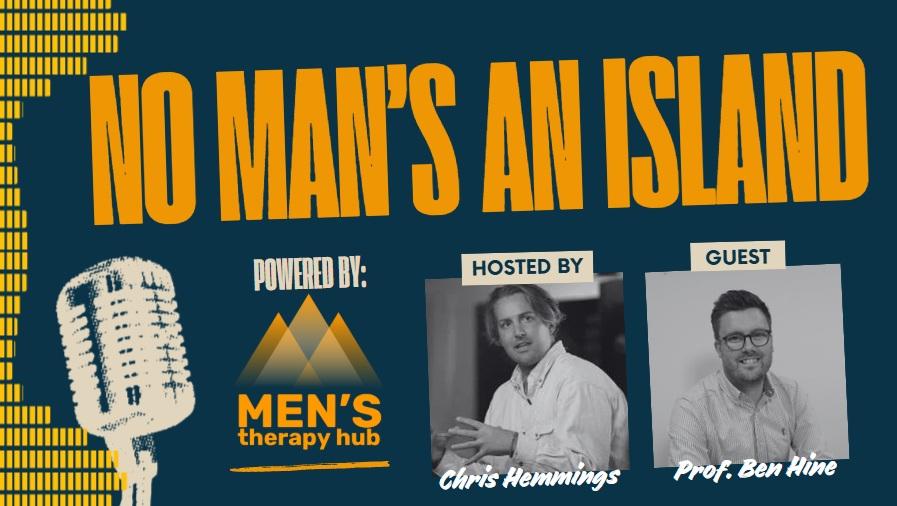
Welcome to No Man's An Island, a podcast powered by Men's Therapy Hub, a directory of male therapists for male clients. On this episode, I'm joined by Josh Connolly. He's an author, speaker and breathwork facilitator whose work explores childhood adversity, family dysfunction, and the lasting effects of growing up with emotionally immature or harmful parents. His book, It's Them Not You, ask what's... And this is why we do it pre-recorded. So I'm going to start that again. Go on. Go, go.
Josh Connolly (00:28)
Just before you start again, your sound's
gone really bad.
Chris (00:32)
It does this, this is the tenth time it says that. em As long as you can understand what I'm saying.
Josh Connolly (00:40)
can now it's got better now.
Chris (00:42)
Okay, it just takes a little time to catch up. So, all right, I'll just carry on. I'll start again. Welcome to No Man's Island, a podcast powered by Men's Therapy Hub, a directory of male therapists for male clients. On this episode, I'm joined by Josh Connolly. He's an author, speaker and breathwork facilitator whose work explores childhood adversity, family dysfunction and the lasting effects of growing up with emotionally immature or harmful parents. His book, It's Them Not You,
asks what it takes to understand those experiences and build a different relationship with yourself. It also tackles a difficult question which we'll definitely get into which is what happens when an adult child decides they can no longer have contact with a parent. If you don't know Josh, he's big on Instagram because he does an incredible job using humor to make difficult subjects like this easier to engage with. Hey Josh!
Josh Connolly (01:34)
How you doing? Thank you, mate. Appreciate the intro,
Chris (01:38)
Yeah, must be weird to hear your own intro. I've never actually asked somebody this before because I always talk to my guests beforehand about the fact that we do the intro live. Mostly you don't hear your own intro. Is it odd to have your bio read back to you?
Josh Connolly (01:52)
The worst thing about it is when you're online because my reaction is right in front of my face, you know? So like, I'm overthinking it. Like, I'm supposed to look a bit humble. Am I supposed to look like, you know, I don't know. yeah, it's a little,
Chris (02:07)
Yeah. Put my wise face on quick.
Josh Connolly (02:11)
yeah, do you know what mean? Like I'm thoughtful. I'm just accepting it because I've done enough work that I can accept
Chris (02:15)
Mmm. Mmm.
Josh Connolly (02:16)
it, but I'm not egotistical about it. So.
Yeah, I tend to overthink it. However, it's always nice to hear it back, yeah, especially because there's often a little bit of a people's opinion in there as well,
Chris (02:29)
Yeah, yeah, yeah. And this is obviously partly my opinion, partly from your own bio. What's interesting about this for me, as I mentioned to you before we came on, is that I have personal experience of this, not from within my own familial life, but within my wife's life. And I will get into that. But before we do get into that, we always ask the same question first, which is how did you get into this work? So I do want to talk about the breath work stuff because I think that's interesting, particularly with men in mind.
And I have some questions on that for later. But with the kind of family estrangement stuff, how did that become your major focus?
Josh Connolly (03:07)
So I started, I grew up with an alcoholic dad, right? So he died when I was quite young and then I got sober in 2012 and started doing work on myself and sort of discovered the impacts of my childhood and how it was never really talked about and I never put two and two together. You know, I never ah put my adult struggles um as being linked toward what happened to me when I was a child until I...
until I got Stobor and then started working on myself. And then through supporting children affected by a parent's drinking and children of alcoholics, um I realized that the truth is so important, right? If you go up with an alcoholic parent, there's so much that's swept under the carpet and it's the absence of truth, I think, actually at the sort of, you know, the core of what a lot of people end up struggling with. And then through supporting that, I started to support people.
um who had parents where it was like, hang on a minute, this is not just a good person who was, had an addiction problem. We're talking about a horrible, horrible and abusive person here. I also have loved and do love some people that have experienced it as well, but are still experiencing it. So I don't never openly talk about who they are just because
Chris (04:30)
Mm.
Josh Connolly (04:31)
of the impact that it.
Canon would and does have on them. But so it's like close to my heart for a number of reasons, yeah.
Chris (04:39)
um And are you okay to talk about your own experiences with your dad? How much do you
Josh Connolly (04:43)
Mm-hmm.
Chris (04:44)
remember of him and what it was like to grow up with an alcoholic father?
Josh Connolly (04:50)
Yeah, like I, you know, I remember, remember to be honest with you, I only remember the bad stuff. So when I think about my childhood,
Chris (04:56)
Yeah.
Josh Connolly (04:56)
I don't really remember much at all. I think, you know, I was disassociated a lot, probably blocked a lot out, never took a lot in, which is important to say as well. And I think one of the main things, it goes back to what I just said is that when you grow up in a dysfunctional environment, right,
There's a lot of sweeping under the carpet. There's a lot of like pretending things didn't happen.
Chris (05:23)
By who?
Josh Connolly (05:25)
Everybody. So the whole family canoodles together to keep the family secret, right? And that sort of happens subconsciously. It was driven by my mom. So my mom was like, my dad was the alcoholic. My mom was, her addiction became his, you know, keeping up with his addiction. And then that...
Chris (05:44)
Enabling
him?
Josh Connolly (05:46)
Oh, probably enabling him. Yeah. Um, although they sort of separated when I was quite young. that enabling would have stopped then, but my mom's always terrified, would have been always been terrified of like, if people find out what's going on in this house, then, you know, I might have my kids taken away from me. And also this is what happens in a dysfunctional system. Right. And so when you have a dysfunctional system, you have the problem.
which becomes abusive at the heart of it. In my case, my dad's alcoholism. And then everybody around it, everybody within that system protects the dysfunction that they don't believe that they can change. So as a child,
Chris (06:30)
Mmm.
Josh Connolly (06:31)
I don't believe that I can change my dad. So like, I try and find control in new ways, which is to pretend that the issue doesn't exist, right? And blame everybody else. And just to like really hammer that home.
That doesn't just happen in family systems, right? That happens in all systems. It happens on a societal level. If you look at society today, you could argue, and I would argue, that at the top, the ones that hold all of the power are abusive and dysfunctional. And because the people of society believe that they can't change that, they start to blame other people, whether it's immigration or addiction or homelessness or...
Whatever, nobody looks at the people that are in power that are siphoning all of the money away because they don't believe that they can change that. So
Chris (07:23)
Mm.
Josh Connolly (07:24)
everybody protects that system um and instead opts to take on different roles. And that's what happens within a family.
Chris (07:33)
Yeah, just as a side note on that, I was listening to a John Ronson interview the other day. you don't know John Ronson, he makes incredible documentaries about weird things that he finds. He was the guy that wrote the psychopath test. And he's like, actually the vast majority of people who run huge businesses or are in charge of companies are in some way psychopathic, right? But
Josh Connolly (07:52)
Mm-hmm.
Chris (07:52)
then what happens is sycophants enable them, right? And of course, within a family structure, it's not necessarily sycophantic, although maybe...
a son toward his dad, maybe there is a little bit of that. Maybe there is a little bit of, he's still my hero. Because I'm really interested, you mentioned that you fell into addiction too. And I wonder how much you have kind of wrangled with this idea of you idolizing your old man when you didn't know better. And like, at what point did the penny drop? know, when did the ceiling shatter? When did it all come falling down? And you thought...
Shit, this is not actually functional as a human.
Josh Connolly (08:34)
Yeah.
Chris (08:34)
I'm not functional now as a human.
Josh Connolly (08:37)
Well, think, look, for me, I always knew that, like, my mom had always told me, if you ever get to a place where you can't control your drinking, you'll never control it, you'll just have to stop, right? She said, I watched your dad try and control it and he never could. But I think, like, the fallacy around who my dad was, again, this is what society does, right? So, my dad went to prison, right? I could tell a stranger, right? My dad went to prison when I was five.
He was there for a few years when he came out, was an, you know, and before he went in, he was an abusive, violent, angry and chaotic man. Right. uh And a lot of people still today would go, yeah, but you know, he loved you, didn't he? Right. So I could say that to a stranger and
Chris (09:22)
Which is
true, but it doesn't mean anything to like the... It doesn't stop the impact.
Josh Connolly (09:26)
Wow, but
this is the discussion that I would have is my dad didn't love me.
Chris (09:33)
Okay.
Josh Connolly (09:34)
Right, right? My dad may have loved me, but because of his addiction, he was incapable of loving me. And it's an important distinction because that's
Chris (09:45)
Right.
Josh Connolly (09:45)
not love. Like physical violence to your mom in front of you is not love. Now, there's reasons why his love for me
he wasn't able to carry that out. But he didn't carry it out. So he didn't love me. There may have been moments when he was able to show love, but because the other moments were so huge, I don't remember them. And like, I think that makes a lot of people uncomfortable, because this is what we do, right? Instead of facing the reality, the difficult truth, we go, no, but you know, I'm sure you must remember some moments.
and there will have been moments and you just got to find in your, and I'm like, I spent my life finding them them. And so I think we have to be careful of how we romanticize love because...
um In the end, there's an accountability issue here. Being violent with your mom in front of you is not loving you. It's not, right? And again, so
Chris (10:54)
No, no, it's absolutely right.
Josh Connolly (10:56)
we have to come back to that because then otherwise we go, like at what point does somebody go, no, this is not okay. And I think that, look, I think we all have, I'm a parent myself, right? So I think we all.
have this thing going on in our minds where we're like, I've failed so much to the parent, right? I've got it so badly wrong so many times. I can't be harsh to parents, right? And that's true. I think we should be as easy on ourselves and on our parents as we possibly can. And, and as a dad, I wanna be as accountable as I'm, like, anything that I do, if anything that I do in my life.
The thing that I want to be the best at and give myself the least leeway in is parenting my children. Like, surely that's true for all of us. And if it's not, we should question why. And I think the reason we don't question why is because it's uncomfortable. Because I don't like that on a daily basis, I'm not the best version of myself I can be with my kids because...
I'll take this a step further and I believe most people are the same, right? My kids often get the worst version of me. Because I'm on a podcast for you, right? I'm turning up with the best version of myself that I possibly can, right? You're asking me questions,
Chris (12:24)
Yeah, you're at work. I get it.
Josh Connolly (12:26)
you're doing it, right? But if I get home later and I'm tired, right? And I walk through the door and I take Josh, the working Josh mask off, however much of a mask it is,
Chris (12:36)
Yeah, because somebody on a podcast has
pissed you off with the stupid questions or whatever. Yeah.
Josh Connolly (12:40)
Yeah, but whatever yeah, and then
my son could ask me the same question and he doesn't get no he doesn't get the Hmm, let me let me let me try and unpack that for you answer. He might get me up I've had a big debt. I've had a busy day so I Have to have to constantly work on that I have to constantly I Want to be as accountable as I can and to be as accountable as I can when it comes to parenting I have to be uncomfortable
and face the truth because my children's truth is what I tell them. And if I fob them off because I can't be bothered to be emotionally available,
I'm passing, I'm repeating patterns. And I do that, by the way. I do that, and that's the work.
Chris (13:33)
But of course you do that and of course you turn up bad sometimes because you're feeling bad. Like that's just being human. I love that and I've never heard anybody say it that way before. And also because I'm not a parent and I don't intend to become one. So I don't have that frame of reference. However, what I do have is a deep understanding with my therapeutic work. Cause I only work with men.
I see a lot of dads and I see a lot of dads who come and it kind of makes me kind of chokes me up a little because these men come to me and they're like, I'm not being a good enough dad. I'm not, and they're beating themselves up because of it, right? They are haranguing themselves. saying I should be this, I should be that. And I have to say to them like, how could you be that based on everything that you've just told me about your past and you've just arrived in therapy, right?
And I think about, there's this great illustration, which I'm sure you must have seen of like a great granddad screaming at a granddad, and then a granddad screaming at a dad. And then the dad has this like shield up to the granddad. And he's just
Josh Connolly (14:45)
Mm.
Chris (14:46)
holding the shield. And then his son is being sweet to the grandson.
Josh Connolly (14:53)
Yeah.
Chris (14:54)
And I see that and I just think like, to me, somehow I feel like that is our generation's work.
Josh Connolly (15:00)
Yeah.
Chris (15:00)
Like we as men are starting to recognize also I must say like the grander feminism movement has been pretty damn good at pointing it out. Like,
Josh Connolly (15:08)
Yeah.
Chris (15:08)
but we as men, which you know, again, I don't agree with everything about the feminist movement, but there's some magical, wonderful things that have been really important and that's absolutely one of them. And that we as men are starting to go, wait a second, I don't want to give my kid what I was given. So for you,
When did you realize that? When was that moment? I'm assuming it have to have come before your kid was born. Because I know that because you've done the work on yourself, maybe not. But I know for some men, it's that moment when they first hold their kid and they're like, fuck, you know, like,
Josh Connolly (15:45)
Yeah.
Chris (15:46)
okay, I don't want this kid to experience what I experienced. And of course then some men will go into like hyperdrive, which also isn't particularly useful. And I'm gonna rant here now, but my listeners are used to this.
Josh Connolly (15:57)
Yeah
Chris (15:58)
And because I think, you know, every parent will fuck their kid up in their own special unique ways. And I make the joke with my clients to say like, some of the most fucked up people I know are the kids of therapists because they really overthink parenting.
Josh Connolly (16:10)
Yeah.
Chris (16:11)
But doing your best to put that shield, that barrier up to the generational trauma, because your dad must have experienced all sorts of shit, right? But that shouldn't be yours to carry. And that's what you're doing for your son. so yeah,
Josh Connolly (16:18)
Yeah, yeah, he did, Yeah, yeah, yeah. uh
Chris (16:25)
I don't know you have a son, sorry, but your kid.
Josh Connolly (16:27)
Well, I've got six kids.
Chris (16:29)
Wow, okay.
Odds are you have at least one son then.
Josh Connolly (16:34)
I do. I think you said son because I referenced him in my
Chris (16:38)
Okay.
Josh Connolly (16:38)
rant before your rant. But listen, let me just quickly say as well, the men that are coming to you and being hard on themselves, like we're all really hard on ourselves, right? And I think there's a lot of work to be done around that. But how great that they've taken it upon themselves to go to therapy. You know?
Because I do this stuff online where I talk about em toxic parents and stuff like that and I talk about some of the realities of what people experience and I'll often get people that comment and they'll be like, wow, I've got no idea why my children don't speak to me. So what am I supposed to do about that? And I always answer with the same comment, what's your therapist say about
and they don't have a response because they're not seeing one. And I always say straight away, like, if I reached a point where one of my kids did not want to speak to me.
If I wasn't already in therapy, and by the way, if it had got to that point where they literally had decided to go no contact to me, I would bloody hope that I was in therapy long before it happened. um
I'd go to therapy. So like, I think that's an important point. And by the way, like just as a side point, estrangement is complex and doesn't always happen just because there's a toxic and abusive parent at the helm, right? It doesn't, it doesn't, but sometimes it does. And I always find that if you're on one of my posts blaming me, then you're probably one of the people I'm talking about because that's what I think. um
But in terms of like, to your question of like, where, you know, where did it all change? My first daughter was born when I was 18. So I was still in the madness. I was still drinking. I was still, I was in a very, very dysfunctional relationship. And we had four children together before I stopped drinking. So my eldest daughter, who's now 20, lived the first six years of her life with me as inactive addiction. So, and
um her struggles reflect that, you know? And I've had two children in sobriety um and they're different human beings to the four that were born when I was drinking. So it's
Chris (19:06)
Hmm.
Josh Connolly (19:07)
like really important to understand that. And again, some people will go to me, oh yeah, but like they would have been too young to, and I'm like, no, no, no. Like the whole too young to remember thing is.
is something that we say, like the opposite is true, right? If it was the first few years, that's when their brain is forming at the most rapid rate based on its environment. So I know it's hard for us to realize, but the opposite is true. Like we like to think they were too young to remember, but they might be too young to recall, which makes healing even harder because it's all just trapped in
Chris (19:38)
Mm.
Josh Connolly (19:39)
their body and they can't rationalize about it,
Chris (19:42)
Yeah, and
it's where in therapy often it will be like, I don't remember much for the first 10 years of my life. And I'm like, right, that's not because you've got bad memory, that's because you blanked it out. Like that is repressed memory, right? Your
Josh Connolly (19:54)
Yeah.
Chris (19:55)
subconscious remembers, your body remembers it, like your holistic being remembers it, but your active memory doesn't. Because actually,
Josh Connolly (20:00)
Yeah. Yeah.
Chris (20:03)
you know, and I say to my clients, like, I'm kind of grateful to your mind for being able to do that for you, because imagine how bad it would be if you could remember it all, you know?
Josh Connolly (20:10)
Yeah, exactly. Yeah,
exactly. Like it makes sense as a coping mechanism, right? And I think, you know, a lot of it is that I was so tuned out in my childhood that I didn't even take it on mentally, you know, but my body will have still done. there was all that. But for me, the change come, I mean, it was like the moment I stopped drinking.
Look, I'll give you the truthful answer when I stopped drinking. um I could put it down to a million or one different things, but ultimately I don't know why I was able to stop drinking. I could say it's because I wanted it enough. I could say that I reached a certain point. I could say that, you know, I had the big enough desire, but none of that would really be factually true because if it was addiction wouldn't exist because I'd just go.
I know loads of people trapped in addiction that wanted it enough and they're not here anymore. So, am I just sort of better than them? No, I don't think that's the case. I think that addiction is way more complex than that and I think that the initial moment of me getting sober, I've been very, very fortunate um and I try not to take that for granted, but...
It's been nearly, it's been over 14 years now of no alcohol, drugs or anything, mind-boggling. But yeah, which is great, but don't think that it's some sort of heroic story because there's been periods of that 14 years when I've done everything but drink or use drugs. You know, and I think that it's important to highlight that, you know, I didn't stop drinking and stop using drugs and become this like incredibly functional human being, you know.
I became a dysfunctional, yeah, I became a
Chris (22:03)
Overnight.
Josh Connolly (22:05)
dysfunctional one who had no way of escaping it. So it was like worse for a bit. And sometimes I can fall back into being that same human being. And I think it's, you know, I think it's important to just, I always have to recognize that I'm sort of blessed with a little bit of charisma and I'm good at talking, right? Which is great for stuff like this, but it also can be a real hindrance because
I can talk my way out of anything and that's not always useful.
Chris (22:34)
Yeah,
yeah, I do. And it's why quite a lot of the therapeutic work that we're speaking about on this podcast and within our community is like, actually a lot of men need to be called on their bullshit because there's a lot of super confident men who will come to therapy and be like, I actually don't think there's much wrong and there's nothing. And it's just like, hey man, like actually, can I just point out like a pattern, like a very clear pattern I'm seeing and what, okay. And you know, that's a change that needs to happen.
what you're talking about here is this like, this change within yourself, and I love how clear you are on this, this change within yourself that was, okay, I've stopped drinking, that's the start of the work, right? It's like you come to therapy, that's the start of the work, but unfortunately what I hear from a lot of clients and probably the most common reason that men, in my experience, in my work, end therapy early.
is like before we've actually got into the meat of it is because while I'm leaving sessions and I'm feeling worse and I'm like, yeah, I told you that in our intro session that this would get harder before it gets easier.
Josh Connolly (23:42)
Yeah.
Chris (23:43)
And it will. And this is where that work that we talked about earlier about our generation and what you're doing and what many of the people that you work with are doing. I admire that so much because it is the path of very, very much resistance.
Josh Connolly (23:59)
Yeah, and it's and we live in a world like, you know, in the social media age where everything gets productized, right? And then, and then the people that speak the loudest about stuff on social media tend to be and this isn't a dig at them because I think people should have careers and stuff, right? And I'm one of them. But the loudest people on social media are the people that ultimately behind the content that they're creating is they're trying to sell something, right? So it's not easy to sell something if you're like, come and do this thing.
you'll feel shit for probably at least a year. Do you know what mean? Like, yeah, yeah, yeah.
Chris (24:33)
Yeah, therapy, it sucks for a while.
Josh Connolly (24:37)
Or, you know, like sober coaches, you know, you see sober coaches that go, you know, I stopped drinking and everything got better, right? And they're gonna get more work than if I become a sober coach and went, stopped drinking and planned my own suicide nine months into that, you know? And sobriety taught me.
that all of the things that I said I only did because I was drinking is actually bullshit because I've done most of them sober. So then you go, oh, what does this mean? Because, you know, back in the day when I used to drink loads, I'd be like, I would never, I would never do that when I'm sober, you know, like it was because I was steaming drunk. And then, and then you stopped drinking and you're like, here I am doing it sober now. So what does that mean?
Chris (25:20)
Yeah. High reality.
Josh Connolly (25:22)
Exactly, you know, and so like,
the realities of this stuff. And again, like I say those things not to beat down sober coaches or any other coaches that are talking about healing, right? Because that's the world that we live in, right? And I understand it. And a lot of these people are doing good things, right? And they're supporting people in a good way. But we...
We often don't see truth online. know, we see the highlight real. Another example, me and my wife separated like 18 months ago, right? And we're very good friends now. We have an amazing co-parent in relationship. But in the buildup to when that separation was about to happen, my algorithm, however it does it, realized that my marriage was in trouble, yeah? And all it was doing was showing me influencers who had left their marriage and like just had this, you know, was...
I knew I had to leave and I did and it's the most now I'm in like, I don't know, Bali walking the mountains with my kids or whatever. So then you're watching and here I am 18 months later still like in waves of grief about a decision that was probably right for both of us. But it ain't like the people on Instagram I see. Do you know what mean? So algorithms play a big part in this stuff.
Chris (26:45)
And again, I admire that you are able to see yourself like you are a part of that ecosystem, right? Like you
Josh Connolly (26:51)
Yeah.
Chris (26:52)
are an online salesperson. However, you are also not at the end of every one of your videos going, uh you know, buy this cap that I'm wearing, because I know you love wearing caps, uh you know, buy my beard oil 10 % off using this,
Josh Connolly (27:04)
Hehehehehe. Hehehehehe.
Chris (27:08)
like whatever it might be. And what you're doing is you're making it accessible.
Josh Connolly (27:13)
Yeah.
Chris (27:13)
And what you've done somehow is you've made what I consider to be one of the almost biggest like taboo subjects accessible. And I'm gonna say this now because I say this with my wife's absolute consent, by the way. So when I met Sina four years ago, four and a bit years ago, I had never experienced somebody who had broken up with a parent, if you wanna use that terminology. I knew people who...
their parents pissed them off. knew like, you know, I'd started as a therapist. So I'd had some people talking about the challenges with their parents and a lot of like forgiveness of their parents and alcoholic parents who they, you know, they kind of go and do Christmas and Easter just because of duty and whatever, right? But what I started to see with my wife was the pattern with her own mom, just how deeply...
like wounding that was for her every time she spoke to her, nevermind hung out with her. And I'm not gonna go into the details of that because that's not my story to tell, but from my perspective, I'm gonna own this part of it. I'm gonna own the part of being the person initially who was like, but it's your mom.
Josh Connolly (28:27)
Yeah.
Chris (28:28)
Because my relationship with my mom is so good that Sina has now basically stolen my mom from me and hangs out with her more than I do, right?
Josh Connolly (28:35)
Yeah.
Chris (28:36)
Like my mom is like the most mom-like mom you can imagine. yet that like that is a brag. Like that is, and to be honest, it's actually why it's actually what I'd label as my emotional privilege. It's the biggest privilege I ever had in my life.
Josh Connolly (28:46)
Mm.
Chris (28:47)
Having a wonderful parents. um But then what happened was like I then go and speak to my mom about this and my mom is like, like literally her, but you could see the cogs in her brain just going like, what that?
That can't be a thing. There has to be a way to reconcile it. And it took me a while to get to the realization of like, there is literally no way.
Josh Connolly (29:14)
Yeah.
Chris (29:14)
Because this parent will not see my wife's perspective on anything.
Josh Connolly (29:20)
Yeah.
Chris (29:21)
Everything is blame and everything, everything, everything is her fault, right? And it's what you alluded to right at the very start. Everything is her fault. Everything is someone else's fault. Everything's your fault, Josh. If a kid breaks up with a parent,
Josh Connolly (29:31)
Yeah.
Chris (29:31)
somehow it's your fault.
Josh Connolly (29:32)
Yeah.
Chris (29:33)
So like, that must be one of the biggest challenges in the work that you do is if you haven't had any lived experience, like abuse, violence, like very clear, as a culture we've kind of begun to reckon with that. But like emotional neglect, we don't really have a place for that. So like,
Josh Connolly (29:56)
Mm.
Chris (29:57)
how often do you get that push back and how did you first start to navigate that? Because
It revolutionized actually my therapeutic work because
Josh Connolly (30:06)
Yeah.
Chris (30:07)
now clients are talking about it and I'm no longer like subtly asking the questions of what would it be like to rectify it. Actually it's like fully what do you need from this?
Josh Connolly (30:16)
Yeah, yeah, yeah. And that's great to hear, you know, because I've, you know, I hear a lot of difficult stories from people who have gone into therapy with it and have been through a number of therapists who are all in the end, ultimately pushing reconciliation and trying to find out what it is about the individual that won't reconcile rather than thinking maybe this is something where reconciliation is not possible, you know.
Chris (30:43)
Yeah, what's the best
for the client, not what's the best for ah the normative experience that we have as humans.
Josh Connolly (30:50)
Yeah, yeah. And look, in many ways, like...
You want a society where most people can't fathom it, right? You know, there's this kind of medium that we do need to find when we talk about lots of different things, you know, people talk about normalizing the conversation. And I don't think we want like it should never be normal, particularly for a mom, by the way. And it's probably a little bit controversial to say that. But like for me, particularly a mom, for a mom to be so nasty.
and abusive and I'm not talking about your wife here now, I'm talking in general and people's experiences
Chris (31:27)
No, no, I know, just generally.
Josh Connolly (31:29)
here, generally. For a mom to be so like, and this isn't like, we're not talking, these do exist, but I'm not talking about low effort moms here. I'm talking about moms who like are disgusted by their child, right? And make it their life mission to be horrible to the child.
And there will be maybe not listening to this because of the type of listener that you would get, right? But there'll be a lot of people that would say to me when I say stuff like that, you know, you've got a lot of hate in your heart or you're angry and I think, well, I am angry. Yeah, I am angry about it. It does make me angry. Yeah,
Chris (32:12)
Good reason. Yeah.
Josh Connolly (32:13)
like it does. um And I get a lot of kickback. I get a lot of kickback. And I think there's a mixture of some people that sort of kick back.
um I think do it because they're sort of good people and they just cannot fathom that people that like I'm talking about would exist. um And then I get, mean, a lot of the kickback I get ultimately is from the parents that I'm talking about. They're the ones that show up with, you know, the sort of biggest kickback. But to your point about like emotional abuse, right?
Wherever there's an imbalance of power, there is the potential for abuse.
Chris (33:00)
Sure.
Josh Connolly (33:01)
Whenever somebody holds more power. um So like you as a therapist, right? And I'm not a trained therapist, but like a lot of your work, a lot of your training is around making sure that you don't abuse the power that you have. Exactly.
Chris (33:15)
Yeah, the ethical framework, yes.
Josh Connolly (33:17)
Which is all about you've got power, right? And so we see this all the time. We started off by talking about it, you know,
Politics right they've got power right when that goes the riots because and this is why like In in politics you can't have somebody at the top for too long because they just get lost on the power because power by the way and I'm an alcoholic drug addict Power is the most abusive. Sorry power is the most addictive Thing I've ever experienced It's addictive it's alluring
Right? Like what comes with power and prestige and, you know, I'm somebody who felt like everybody looked at me like I was a drug addict when I first got sober, who's now got a platform and sometimes walks into rooms and people look at me like I'm a hero. But that's a lot of responsibility and a lot of power and you have to work at that to make sure that you even that power up. Right? So when a child is born,
Their parents are God. I choose that word carefully, right? Their parents are God. They are God Almighty. Right?
Chris (34:30)
Mm-hmm. Yep.
Josh Connolly (34:32)
They are, yeah. So, there is never as bigger, clearer and obvious power imbalance as a parent to child. Now, in a relationship, a romantic relationship, an abuser will spend time gaining as much trust as they can to get power. So,
common tactic of an abuser will be to get you speaking right to be very charismatic and alluring and get you to tell me all of your struggles so then I can meet all of those knees and love bomb you that and do all of that so that there's then this you've got this deep trust in me in this imbalance of power now you don't need to do that when when you're a parent because that imbalance of power is there not only is it there it almost never leaves because
Even when people go no contact, they don't run off into the sunset. Right? They still live with that. There's always even if it's just a tiny piece of hope that one day they'll get to have the parent that at some stage in their life, they will have had to have convinced themselves that they had. So, you know,
Chris (35:44)
Yeah.
Josh Connolly (35:45)
that's why it's so so. when abuse happens,
It's normally by somebody that you trust. it's a real, I can't remember the statistics so I won't butcher on, but it's a real high percentage of anybody that gets abused is, we used to do stranger danger, right, at school. We don't really do that anymore because you're probably like the likelihood of a child getting bundled into the back of a van. I mean, it does happen, right? But it's way less likely than somebody within your house abusing you.
Chris (36:16)
Well, the statistics actually point out, like, particularly for women, the vast, vast majority of people who are violent toward women are people that the women know. Actually, for
Josh Connolly (36:25)
Exactly.
Chris (36:25)
men, it's not. Actually, for boys, it still is. But for men, it is actually strangers. But it's not that sort of stranger danger that you talk about. It's on the street violence. You know,
Josh Connolly (36:37)
Yeah.
Chris (36:37)
it's bravado, machismo violence, which is a whole different podcast, right? A whole different conversation.
Josh Connolly (36:42)
Yeah, yeah, yeah.
Chris (36:44)
But...
Yeah, I'd never considered that. mean, it's one of those things that when you say it, it's so obvious that, that as a parent, you know, I even think about my relationship with my mom now. Like, there is still some strange, she's like in her seventies, right? And there is still some like, you know, saluting my mom as the kind of matriarch of the family, even though I'm a grown adult with my own life and everything, you know, I was going to say in order, but that's a lie. You know.
everything as in order as I can possibly do each day.
Josh Connolly (37:15)
Yeah. Yeah.
Chris (37:19)
But then, yeah, because, and again, with Sina, I've noticed this, there is still this like tiny crumb of like, what if, you know, or when she does hang out with my mom, it's this, if only I could have had this with my own,
Josh Connolly (37:35)
Yeah.
Chris (37:36)
you know? And that must be also part of the grief because I'm going to presume that
Some of the people who go through what you're talking about, who do break up with a parent, they are labeled as abusive themselves. They are labeled as bad. They are labeled as wrong. But actually what they are more than anything is deeply wounded and grieving.
Josh Connolly (38:01)
Yeah. and you know, whenever they say to somebody, don't speak to my parent, right? 99 % of the people's reaction is not, wow, how bad must your parent have been for you to reach a stage where you don't speak to them? That's not people's first thought, People's first thought is you only get one mom or dad, you need to try and find a way to love them. Right? So, they are often seen as the one...
Why is it always the adult child who we put the pressure on to make peace? Right? Because we always support the power. It comes back to that. We always support the one in power. The one who holds the power is the one, that's from a societal level. Because as that, you know, the victim, you can even tell people how bad it was, and they still won't go, wow.
your parent really needs to do some work to make this right. They'll still go, but you've got to find a way. You'll miss them when they're gone. And so, not only are you combating with all that, but then you've got this weird living grief, right? Let's just talk about that for a second. My dad died when I was nine years old, right? That took away any possibility that he might have been able to get sober and change. So I'll acknowledge that. However, if he wasn't to get sober,
and would carry on living the life in the way that he was. But then what a relief that he died when I was nine. Maybe I'm one of the lucky ones. And again.
Chris (39:39)
And that
is a very unpopular thing to say.
Josh Connolly (39:42)
Yeah, it is a very unpopular thing to say. Yeah, but at least there's a line in the sand.
Chris (39:48)
Yeah.
Josh Connolly (39:49)
I get to deal with grief.
Chris (39:51)
you
Josh Connolly (39:52)
I get to deal with grief, right?
Chris (39:54)
not abuse.
Josh Connolly (39:55)
Yeah, and not living grief, which is,
Chris (39:58)
Yeah.
Josh Connolly (39:59)
which is, I would imagine similar to when you lose, you know, like when a child goes missing and they never get found.
Chris (40:12)
Yeah.
Josh Connolly (40:12)
There's always this maybe, maybe and people go let it go now, but there's always, you'll always have that maybe because you've got no definitive answer. What's the most anxiety juicing thing in my life? Not knowing. So I've got all this anxiety going on if I'm in living grief. I'm grieving the parent that I never had. I'm also knowing that one day they're going to die and then I'm what's that going to do and what's that going to bring up? I'm then like.
every now and then in my vulnerable moments might see them acting in a certain way. They might still be posted on Facebook about how much they miss their kids and you still like, oh, do I, you know, maybe, maybe this really has changed them and all that kind of stuff. And so there's this push-pull that goes on, which is different to grief. Grief is a line in the sand and grief will come in waves. And I think that you, you don't, you know, time isn't.
doesn't fully heal you and you have to learn to live in a new life with the grief of what you experienced, but that's different to live in grief,
Chris (41:15)
Yeah, I mean that that line that time heals you is nonsense is what you do with that time, right? Because
Josh Connolly (41:21)
Yeah.
Chris (41:21)
time doesn't heal you if as you were doing and this is no slight on you, you were drinking and taking drugs to cope. That's not healing, you know? Time heals you when
Josh Connolly (41:29)
No, yeah.
Chris (41:30)
you spend the time actually focusing on what's going on. Yeah, I mean, I have so many questions for you here, but I tried to keep it to an hour. So a few more on this before we move on to the breathwork stuff. What would you say are?
the most common traits, let's call them, or behaviors that people who have gone through what you and many others have gone through and then, kind of whether they have actually broken up with a parent or not, you know, they're kind of growing up with an abusive parent, what are the most common behaviors that they will then take into their own romantic relationships or their own friendships even?
that perhaps they don't realize our repetitions of that until, you know, maybe they sit in front of someone like me.
Josh Connolly (42:20)
Yeah, well, I think the main one is like, people pleasing out of, you know, a belief that they're not good enough. Right. And I think that when you grow up with any kind of dysfunction like that, and there's any dysfunction going on with your parent, you don't develop a full sense, a full and healthy sense of self. Right, because you, you grew up as an extension of somebody else. And so you only got your love when you were what they needed you to be. Right. So
If I look at myself as a prime example here, my whole sense of self throughout most of my life was based around who everyone needed me to be. I talk about how even when I go to therapy and it's changed now, um and I've worked with therapists that have helped me with it, but I used to go to a therapist, they'd ask me a question, I've worked out why they asked it and give them a really good answer. And then I realized that they...
get a sense that they're getting some breakthroughs and then I spend the whole hour just looking after the therapist and making sure that they're happy that we've had a good session. Right, because my sense of self is not based on who I am. I don't even, you will find people like me, you ask them how you're feeling, and you think, I'm thinking, how do you want me to feel? How am I supposed to feel? Like, you know, like, what do you want to do? Somebody like me goes, I don't mind, what do you want to do?
Chris (43:40)
It's one of the most powerful questions I ask my clients, particularly when
Josh Connolly (43:42)
Yeah.
Chris (43:43)
they have that experience is, are you trying to be a good client right now?
Josh Connolly (43:47)
Yeah.
Chris (43:48)
Because I don't need you to be a good client. You can come here and be a fucking disaster, a mess, like whatever. And actually
Josh Connolly (43:53)
Yeah.
Chris (43:54)
that's gonna be more beneficial in the long run. But that comes,
Josh Connolly (43:56)
Mm.
Chris (43:57)
that question comes from an understanding of if I've heard the potential for parentified child happening, you know, are you trying to give me a sanitized version of it? Because I can handle the reality.
Josh Connolly (44:07)
Yeah.
Chris (44:08)
But most people in their life haven't been able to handle the reality. So they don't have any proof that anybody can. It's my job to prove to them that you can
Josh Connolly (44:14)
Yeah. Yeah.
Chris (44:17)
tell me anything and I'm not gonna smash the gaff up, you know?
Josh Connolly (44:20)
Yeah,
yeah. And these people will often work hard for love and abandon their own needs, right? Because that's what love was with growing up. You were rewarded with love. And I always say that unconditional love is something that I think you should only receive from a parent. We can talk about unconditional love in our relationships if we want, I think that to... Yeah,
Chris (44:47)
Controversial.
Josh Connolly (44:48)
but...
There is conditions. There is conditions, right? In most relationship, there are some conditions and if you broke those conditions, it would probably result in separation and ultimately in the end, the love would go, right? But we should develop our sense of self under the loving gaze of a loving parent, right? So I should have a parent who when I'm happy, sad, lonely, jealous, rageful, all of those things is able to mirror love back at me throughout my childhood.
So I start, I don't get a sense of shame when I cry because I've got a parent who was there with me when I cried and let me know that it was healthy and normal and all that kind of stuff. But a lot of kids don't get up, right? And so the reason I feel shame when I'm upset is because I knew that I grew up in an environment where my mom was already dealing with too much stuff. So I never wanted to burden my mom with the ways that I felt. And so I felt closest to my mom when I wasn't burdening her with my emotions because she was emotionally full.
So that means that in my personal relationships what happens is, I show you that I'm alright all of the time and then slowly, slowly over time start to feel entirely misunderstood. Because I'm not speaking my truth and I don't know how to communicate it because I'm terrified that if I do you'll leave.
Chris (46:12)
And what you're talking about, just in case, for the non-therapists listening, there is this terminology, the parentified child,
Josh Connolly (46:18)
Mm-hmm.
Chris (46:19)
right? And the parentified child, I might fail my therapy exam now, I'm pretty sure it's from transactional analysis. It is the concept that as a child, your major focus is on creating safety or finding safety around you. You your prefrontal cortex is desperately trying to find where you fit in. And actually, if you notice that a parent is really struggling or is chaotic,
your brain is smart enough even as a five-year-old to realize, I need to not add to any of the disaster and chaos that's happening here. So therefore I have to start behaving like a parent as a child.
Josh Connolly (46:52)
Mm.
Chris (46:52)
And actually again with clients, it's often like, and what were you not allowed to behave like? And then they go, a child. And I'm like, right.
Josh Connolly (46:59)
Yeah.
Chris (47:00)
And what does a child do? Child fucks up. A child draws on the walls. A child shits his pants. Like a child does all of these things that creates
Josh Connolly (47:07)
Yeah.
Chris (47:07)
mess.
Josh Connolly (47:08)
Yeah.
Chris (47:08)
And you don't get to do that. And so now as an adult, you have control issues, know, you are extremely anxious. You potentially develop obsessive compulsive tendencies, not necessarily the disorder, but like you need to keep a grip of everything around you. And it's like, what would it be like if you could just put all that down for a day, you know?
Josh Connolly (47:30)
Yeah.
Chris (47:31)
And it's not your fault that you're like that. In fact, it would be weird if you weren't like that based on everything that
Josh Connolly (47:35)
Yeah.
Chris (47:36)
you've told me.
Josh Connolly (47:37)
Yeah.
Chris (47:37)
Let's remove the shame.
Josh Connolly (47:39)
Yeah, and for so many people, they wouldn't even know who they are if they pulled that down.
Chris (47:46)
No, there's a core part of who they are. Yeah.
Josh Connolly (47:48)
Yeah, it's like,
am I, who am I, devoid of all of that? And this stuff comes up all of the time, you know? Again, like, I told you, you know, I separated from my wife 18 months ago. I don't watch telly anymore. Because I'm like, what, like, you know, I don't, who am I doing it with? What am I doing it for? So I struggle to have my own enjoyment now. I'm sitting here watching TV, right? Because who's it for?
which is like deep, know, when you think about what that means. So yeah, this like core sense of South is like missing for a lot of people that have grown up. And by the way, I think that to some degree, most people uh can resonate with some of the things that we're talking about. And the reason I would say that is because in a hyper capitalist society now that we live in, a lot of...
People's childhoods are structured around paying the bills rather than the actual child. know, even things like, ah and this kind of upsets people because they will have done it. And it's not a dig at them, this is a dig at the system and society as a whole. But you know, like sleep training babies, right?
Chris (49:04)
Mm-hmm.
Josh Connolly (49:04)
As in you put them down, let them cry until they go to sleep.
Chris (49:08)
Yeah, self-soothing.
Josh Connolly (49:10)
Yeah, only exists in a hyper capitalist society, right? It only exists because both parents in today's world have to go back have to go to work in the morning. Otherwise, one parent's just there. Not sleeping in the night doesn't matter. One parent will sleep in and around the baby for as long as it takes. You know, the rush to get the baby out of the parents arms and out of the bed.
only exists in a capitalist capitalist society. Right. So anyway, I appreciate I'm going off the never tangent.
Chris (49:44)
Wow, no, no, no, no, I love a tangent. No, I love a tangent because now
I want to get somebody on to talk about this because I also have a thought for you here, which actually has just come up during the course of this, which is I wonder if ah what seems to be growing in popularity right now is this like gentle parenting, right? Which I wonder if, you know, the kind of pendulum of the hardcore parenting that we've had, which some people have taken way too seriously and...
is why you do the work that you do. And I wonder now there's this gentle parenting where kids can do no wrong. Little Tarquin is just expressing himself. Yeah, but your kid's being a bit of a dick and it's actually affecting the people around you in this restaurant and you're just allowing him to express himself. So can we go back too far the other way, do you think?
Josh Connolly (50:35)
think whenever a pendulum swung too far one way, it always goes and swings too far the other way, right? Before, hopefully in the end, it levels itself up. uh And look, children with extra needs aside, right? Which is a completely different subject.
Chris (50:50)
Absolutely.
Josh Connolly (50:51)
yeah, I see a lot of the gentle parenting stuff and I think sometimes it's driven by people who have grown up in conflict and now have a fear of conflict, right?
Chris (51:03)
from
guilds.
Josh Connolly (51:04)
Yeah, yeah, and it's from from girl and I was deaf. I've definitely been guilty of not gentle parenting, but just sort of let them do whatever they want because I don't want to get in the way, you know, and look, there's a lot as somebody who had children, four children between the age of 18 and 23, and then went on to have two children post age 30.
If everybody could wait till they were 30, I think it would be good news for most of us. That, from my experience, is a ridiculous statement and would never, ever be implemented, but I was a lot more wise and softer and had done a lot more
Chris (51:45)
Yeah.
Josh Connolly (51:46)
work on myself by 30.
Chris (51:47)
Yeah. And I mean, we are living in uh a kind of a perpetual childhood because of capitalism and we've already had incredible guests like Louisa Toxfed Monk talking about that on here. We also have started to realize now talking about the prefrontal cortex again, it doesn't really fully myelinate until our mid twenties. So we don't really know who we are or
Josh Connolly (52:07)
Mm-hmm. Yeah.
Chris (52:10)
how we operate in the world. So I'm going to have to stop because
I could just keep talking about this for hours. What I will say
Josh Connolly (52:14)
Heheheheh! Heheheheh!
Chris (52:18)
though, is to any therapist listening or to anybody, I don't know if you've read this book, I can only presume you have, The Adult Children of Emotionally Immature Parents by Lindsay Gibson.
Josh Connolly (52:26)
It's one of the greatest books of all time.
Chris (52:28)
It's fantastic. And you know what? I mean, she killed it. It sold millions and millions and millions of copies. I've read it. I've read it with my wife's annotations. And it's just like, wow, that helps me to understand so much more. Like, thank you Lindsay
Josh Connolly (52:40)
Yeah.
Chris (52:41)
and my wife for doing that.
So I'll put that in the show notes. And I will also of course put a link to it to them, not you in the show notes, which I haven't read, but she doesn't listen to this podcast because she listens to me every day. So I'm get her as a gift for Christmas. Why would she listen to this? uh So maybe
Josh Connolly (52:57)
Yeah, there you go.
Chris (53:00)
she might listen because it's you Josh and she's a big fan. But I do wanna move on to very briefly at least your breath work because I have this like weird intuition that...
Okay, so I'll try that thought again. Men struggle a lot to get into their bodies. We are trained as men from the very early ages to not feel pain, to not be in our body, you know. Women literally have like a cycle that is internal within them, so they kind of have to be connected. As men we're basically told like, get up, keep running, don't feel the pain.
Josh Connolly (53:35)
Yeah.
Chris (53:36)
To me somehow, I get the sense that breath work
And I'm gonna get you to explain some of the kind of core facets of it. But breath work seems to be potentially one of the like gateway drugs, let's call it. Five years ago, it was like the whole Wim Hof thing. There's something primal about deep breathing that might feel like an easy entry into somatic work for men. I don't know. I kind of just thought about that as I was thinking about interviewing you. Is that a reasonable thought to have?
Josh Connolly (54:10)
I think it's a really good, you know, it's one I believe in.
Chris (54:15)
Okay.
Josh Connolly (54:16)
And look.
There, I believe that, again, not to go off on too much of a tangent here, but I do believe that there is a little bit of an arrogance in the West that we need to look through everything through the scientific Western lens, right? And I think sometimes that can spoil some of these practices that like have been used since the beginning of time in different parts of the world, right? So when it comes to breathwork, I don't like to get too overly...
rational and scientific on it. Because I think you have this deep experience when you have it. And actually I think it's for everybody to kind of have the experience and then make sense of it in the way that works for them, right? And helps them. But I absolutely think that, I think a lot of men, you know if you think of like the calm breathing in through your nose, out through your mouth, right? I think a lot of men struggle with that. think it's like, you know, I always, one thing I say about breath work,
which is slightly different to the breathing patterns, which is like breathing in for your nose and out for your mouth. Breath work's like the HIIT training to breath, know, calming, breathing, being, going out for a jog. And a lot of men tend to like, well, I'll go for the HIIT training, you know, I'll get straight into it. And it is a good thing about, one of the best things about breath work is that you do the pattern and you've got to push yourself a little bit to do it. It's called breath work, because you have to work to do it. uh
And then yeah, you do that and then it does the work for you. Kind of overrides your mind and puts you down in your body, you like it or not really.
Chris (55:56)
Okay, us the sales pitch for Breathwork then. For somebody who is uh very science-minded, uh it's a bit hippie, woo-woo. uh In a few weeks, we're uh gonna be hearing from Emma Marshall, who does this amazing uh movement is medicine. And we talked about, yeah, yeah, so like amazing
Josh Connolly (56:14)
I know Emma, Yeah.
Chris (56:16)
dance, trying to get men into their bodies. It's also an interest of mine very clearly. uh
How would you break through the naysayer? Like, give the sales pitch.
Josh Connolly (56:27)
think that it's one of them things that you will not believe the impact that it can have on you until you try it, right? And what it's gonna do is it's gonna kind of shut down your mind and it's gonna put you down in your body in a way that you've never experienced before unless, and this is probably the biggest sales pitch, unless you've done drugs. Because it really, most people say it is like taking drugs.
because of the impact that it has on you. People talk about getting high on your own supply, right? And it really does feel like that. You're gonna go and have an experience like you've never had before. And if you can just trust the facilitator and trust yourself, you will have an experience. Like I've never done it with anybody and I've done it with thousands of people from all over the world. I've never had anybody do it and follow the pattern correctly.
and not have an experience. And so if you've got anything trapped in your body, you know, if you're somebody that struggles to cry or struggles to do emotions, I would implore you to try Breathwork.
Chris (57:40)
And you talk about an experience, and I know it's obviously unique to the individual. There isn't just like, do this and you will definitely have this experience. What sort of experiences are we talking about?
Josh Connolly (57:49)
I've got about 150 voices in my head at any given moment. And when I finished the breathwork pattern, I have absolute clarity, stillness of mind. I can't sit still. If I try and do calm and breathe in, unless I'm in a group, um can't, really, it's changing a little bit, but I really, really struggle with it. Yeah. When I do breathwork, I can lay there for up to an hour and not go to sleep, but lay there and have absolute calm and clarity.
in my mind. And that is something I never thought I would be able to achieve, ever.
Chris (58:28)
How did you get into it?
Josh Connolly (58:30)
Almost accidentally in many ways, I mean, to give you the shortest version I possibly can of the story, I was trying to meditate all the time, right? Everybody kept saying meditation and I couldn't do it. Every time I closed my eyes, it made me go more crazy or I'd fall asleep. And I used to go and sit in the sauna in the mornings and do it in there because I was like, right, I'm going to do 20 minutes in the sauna. Fighting against the heat sort of gave me a little bit of competitiveness and that kind of worked for me. And I had this deep experience in there when I was like shaking and crying one time.
And I'd come out and I thought, can't wait to do that again. I thought this must be meditation. Kept trying it again, didn't work. And then about four weeks later, it happened again. And for a conversation with my mate, he was like, that sounds like breath work. He's like, you should try breath work. And he sent me a recording and he was like, mate, wait till you do it. And I was a little bit like, I've done a lot of drugs in my life, right? I was like, I think it's great that you think you have these big experiences when you do it, but.
Chris (59:31)
I've had big experiences.
Josh Connolly (59:33)
But I've had big experiences
and honestly I did it and then straight away I was like, this is the missing link for me. Because at that stage, by the way, I was an expert in my experience. know, rationally I sort of knew so much. There's always more to learn, right? But I was an expert in my experience. I knew so much about myself, but something was missing. And the freedom that come from doing a breathwork, the lightness that I felt after, the release of tension.
ah was one of the most important experiences I've ever had in my life. Yeah.
Chris (1:00:11)
conversation with Emma already and one of the things that she said is that you have to be very careful with the messaging and the marketing to get men onto like one of her dance floors for example right to do the movement. um How do you do that? How do you make this accessible for men? Because you know I guess breath work would be unfortunately I think coupled under wellness and for those who not looking online I'm doing air quotes right the wellness industry. um
I don't think it's wellness. think it's core wellbeing um
Josh Connolly (1:00:45)
Yeah.
Chris (1:00:46)
to reconnect to yourself. I talk to my clients, here's a rant again. I talk to my clients about like, if you watch football or like Johnny Wilkinson with rugby and it's stuff like, the thing that they do to calm their mind before they are about to take that kick, they always take a huge deep inhalation and an exhale, maybe one or two.
Josh Connolly (1:01:07)
Yeah.
Chris (1:01:09)
because it does something.
Josh Connolly (1:01:11)
Yeah.
Chris (1:01:12)
in session when I'm talking about doing breathing with my clients, that's how I sell it to them, particularly the ones that are interested in sport. How do you do it? How do you actually engage men? Or actually is it not
Josh Connolly (1:01:21)
Yeah,
Chris (1:01:22)
so difficult?
Josh Connolly (1:01:23)
no, it's easy. I mean, you have to speak to people in a language that they understand. And I think that's something that I've developed over time, by the way, through working on myself. When I first got into sort of healing and spirituality and all of that kind of stuff, I started talking differently, right? Because I wanted to portray that I was spiritual, right? And over time, I've kind of let go of that. And I have faced some backlash in the breathwork community because I say things like,
Mate, if you do this, right, if you give it a good go and I do all obviously when I'm delivering a session, there's a whole safety brief that you have to do, right? And you do all of that. But ultimately I say to some of these lads, mate, if you try this, you're going to be off your nut at the end of it. And it's well worth it. Right. And I had kicked back from the Brefoot community, you know, you can't talk about it like that. And these same people that would kick back at me are sat on panels talking about wanting to just, I want to reach the everyday person with this. And I'm like, well, then stop speaking about
Chris (1:02:20)
you're a guru.
Josh Connolly (1:02:20)
transcending
consciousness and like because You don't talk like that. So why do you think that you're not gonna get anyone to listen now? I Love those sessions. I love I love nothing more than going to somebody who's kitted out in tie-dye It's got long it ends talking in all of that language in it,
Chris (1:02:38)
But you're already sold on it.
Josh Connolly (1:02:39)
but I'm already sold on it Yeah, so you've got to speak to people in a language. You talked about gateway drugs earlier That's what I decided. I want to be like I'll go and
meet these people where they're at and speak to them in a language that they understand. And then hopefully some of them will try. And that's why I get people at my sessions that wouldn't normally try this because I'm in tie dye and I always joke, I haven't got long hair and a beard, but I have, right? yeah, you know, but
Chris (1:03:08)
Yeah uh
Josh Connolly (1:03:10)
so I do fit the bill in that way, but.
Chris (1:03:13)
Yeah,
but you don't don't sound like it.
Josh Connolly (1:03:15)
But I just talk normal, I talk how I talk, you know, and I think...
Chris (1:03:19)
You don't have the soft ASMR voice.
Josh Connolly (1:03:22)
No, no, exactly. like, you know, these people that kick back at me and say you shouldn't speak about something so sacred in that manner and I'm like, give over. Don't claim you want to.
Chris (1:03:34)
Who gets to decide
that it's fucking sacred? It's breathing. Everybody has access
Josh Connolly (1:03:37)
Exactly, exactly,
Chris (1:03:39)
to it.
Josh Connolly (1:03:40)
exactly. And I'm okay with you thinking I'm not that spiritual, because if I was, I wouldn't swear as much as I like, because I think you're wrong anyway, if you think that. reaching people is more important to me than being seen as a guru. right, like that's, in fact, that's took some work, because at the beginning I did.
start to feel a bit like a guru.
Chris (1:04:08)
Mm.
Josh Connolly (1:04:08)
And you know what mean? And then I got a little bit carried away with all of that stuff. And then, you know, you start acting like a guru, and then somebody realizes that you're a human being and you're just as dysfunctional as them, and then they feel let down. So then I was like, my God, I need to do the opposite. I need to make sure people know that I'm a mess, so that they
Chris (1:04:28)
Mm.
Josh Connolly (1:04:29)
don't have that fall, you know? So, yeah.
Chris (1:04:33)
I asked you at the start, which I've never asked anybody for, what it was like for you to hear your own bio back and you said it was a bit weird. So I wonder how weird it's going to be for you to hear me say, like, well done, man, for everything. one of the best things about my life in its entirety, I was a BBC journalist for 10 years. So I used to just get to call people and go like, hi, I'm from the BBC. And they would go, okay, what do you want to know? Which was just mad, right?
But now I get to find interesting people like you online and I go, I reckon they'd be a good interview for my podcast. And 99 % of the time I'm right. And actually, well, only on that one thing, 99 % of the time I'm right. Not in the rest of my life, just to be clear. Yeah, Is he bigging himself up again?
Josh Connolly (1:05:19)
That's why your wife doesn't listen to the podcast. She's like, he's full of shit. 99%.
Chris (1:05:26)
Well, I do big myself up because I think it's better than talking myself down.
Josh Connolly (1:05:30)
Yeah. Yep.
Chris (1:05:30)
And I guess what I'm
wanting to do here is to say like, okay, there are people that look like you like you're a hero when you walk in a room. But I think that for us in the men's space, and I hope that the listeners will hear, here's a guy who's been through some shit. Here's a guy that's dared to do the work on himself. And then not only that, is dared to step into a space and gone, I don't think what's being said about this is actually fair on a lot of people. And...
you're doing work that is outside of the Overton window. I just want to say like, good on you, Like genuinely, it's
Josh Connolly (1:06:06)
Yeah.
Chris (1:06:06)
been a real pleasure to speak to you and to somebody who just goes, I'm just trying, I get the sense from you that you're doing really well, but all you're doing every day is you're just trying your best.
Josh Connolly (1:06:15)
Yeah, totally that. Totally that, yeah. And I appreciate it. I can feel that I'm trying to say loads of stuff to sort of deflect it or minimize what you said, but I will just take it and say thank you.
Chris (1:06:25)
Yes, good. Yes,
good. And there's a lesson for people. I was speaking to somebody the other day and they were telling me that one of the biggest things that they kind of hate the most about human interaction is when someone says something positive about somebody and they go, oh no, no, no, no. And it's like, hey, someone just offered you a positive, like something positive, like a moment of connection.
Can you just grab hold of it, even if it's uncomfortable, and just look at it
Josh Connolly (1:06:55)
Yeah.
Chris (1:06:55)
and go, okay, yeah, someone just gave me that. Ooh, maybe I'll put it in my pocket. I'll deal with that later, you know?
Josh Connolly (1:06:59)
Yeah, yeah,
yeah, yeah. Because it's a bit, otherwise it's a bit like taking a present off of somebody, isn't it? And going, oh, thank you. I'm going to give it to somebody else though. know? Yeah,
Chris (1:07:06)
Yeah. Yeah. We've got the receipt. Yeah.
Josh Connolly (1:07:09)
you've like, you know, you should try and accept it. Yeah, it's not easy. Not easy.
Chris (1:07:11)
Yeah. No, no, but well done. You just did it live and that can be a lesson for us all. So,
so well done. Part of my emotional privilege is that I uh love validation and I seek it. And so when people say something nice about me, I go, yeah, thanks. And I just thought that was normal. Then I realized that I'm the weird one to grow up with such emotional privilege that that's easy for me. So
Josh Connolly (1:07:31)
Yeah.
Chris (1:07:31)
it's why I like to do it sometimes. All right, the final question, Josh. We'd like to give all of our guests a hypothetical, which is.
I'm going to give you unlimited funds, the keys to the vault. With it, you can do anything. It can't just be more Josh Connelly Instagram content. But
Josh Connolly (1:07:50)
Yeah.
Chris (1:07:51)
what are you going to do that's going to have the biggest impact and what impact would it have?
Josh Connolly (1:07:57)
ah I would invest in, so I've got unlimited money, right?
Chris (1:08:01)
Yes.
Josh Connolly (1:08:02)
I would invest in children and make everybody that works with them the highest paid people in society so that it becomes the um pinnacle of what everybody wants to do because if you go and support children and families, you'd become the wealthiest people in society. And I think if we did that, everything would change.
Chris (1:08:25)
Because just to be clear, my opinion is that I've worked in schools for a long time. Teachers are already the best of us, but they are also incredibly stressed because they don't get paid enough. So if they actually had enough money to live a comfortable existence, they would be better educators.
Josh Connolly (1:08:41)
Yeah, yeah. And maybe we just need to pay them fairly because actually if we made them the highest paid, you'd get loads of dicks that would end up wanting to go and do it, wouldn't you? Because you're right, because I always say a teacher's not there for the money and they're not there for the hours. They're there for the love. So
Chris (1:08:56)
Yeah.
Josh Connolly (1:08:57)
like I would invest in them, make their jobs, their lives easier and invest in children. I feel like we're one of the first demographics in the history of our society who seem to
not really care about kids and young people anymore.
Chris (1:09:15)
Yeah, yeah, they're an afterthought. yeah.
Josh Connolly (1:09:16)
Which is crazy to say. Yeah. Yeah.
Chris (1:09:21)
Okay, well on that positive note, where can
Josh Connolly (1:09:23)
You
Chris (1:09:25)
people find you, Josh? Where do want them to go?
Josh Connolly (1:09:27)
My website is joshconnelly.co.uk there's a free breath work on there by the way if people want to try that um
Chris (1:09:32)
guys.
Josh Connolly (1:09:33)
And you'll also find links to uncommon man Which is my men's group that we run in London once a month first Tuesday of every month if you ever want to come along to that ah And then I'm josh underscore FFW on Instagram and tick tock and everywhere else
Chris (1:09:48)
Lovely. All right. Thank you very much for giving us your time. I appreciate you're a very busy man.
Josh Connolly (1:09:51)
Thanks Chris.
Chris (1:09:52)
So I'll speak to you soon.
Josh Connolly (1:09:53)
Thank you.