Chris (00:00)
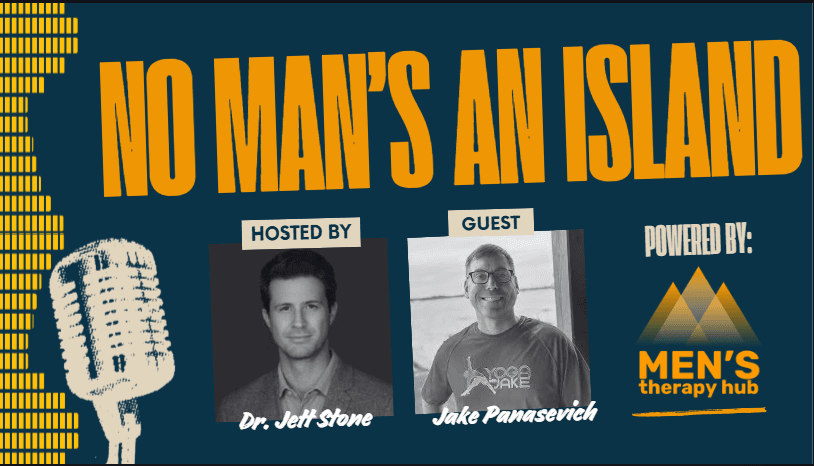
Welcome to No Man's An Island, a podcast powered by Men's Therapy Hub, a directory of male therapists for male clients. Today we're joined by Ali Fogg. Now, about a year or so ago, we had Mark Brooks on. And back then I called him an OG in the men's space, and he had no idea what that meant. So instead of that, I'm gonna call Ali a stalwart instead. As a journalist, he's been writing about men and boys for more than 20 years. One of his more prominent pieces was published by The Guardian for International Men's Day in 2011.
In twenty sixteen, he helped set up the Coalition for Men and Boys, and that has now developed into the Association for Men's Health and Wellbeing, which he now chairs. As a stalwart, Ali has been tirelessly campaigning on issues affecting men and boys, focusing on mental health and suicide, so masculinity, gender politics, and the way society responds to male disadvantage. Hey Ali.
Ally (00:50)
Hi Griff, good to be here.
Chris (00:52)
It's good f to to have you here and you are yet another one of these people that I've known about in this space for way too long and haven't actually ever spoken to. So it's great. This the the list of those is is becoming endless and I'm loving this. It's part of the privilege of doing this job.
Ally (01:09)
Thank you, thank you. I w I have to say at this point, um I had you called me an OG, I would have actually understood that that's that's how much more hip and with it I am than Mr Mr. Mark Brooks. Uh so yeah. He he can be the stalwart, I can be the OG. You're absolutely right.
Chris (01:17)
Okay. I mean it's a low bar to be more hip than Mark, to be fair. Okay.
Ally (01:24)
It's a very low bar to be like more hip than Mark, bless him.
Chris (01:27)
Yeah, okay. Well,
so I was looking back at the article today and and it was it was titled, quote, Mocking International Men's Day Only Proves It's Needed. What led you to write that piece? And also more importantly, because it's the first question we always ask, what led you to start writing about men in the first place?
Ally (01:48)
Yeah, well there there's two different questions there. Um the i if it can answer your second question first. Uh I actually was working as a news journalist at a regional magazine back in the mid to late nineties. And I think it was around about nineteen ninety seven I was commissioned to write a little news piece, like a what they call a nib, a news and brief or a short piece, um, about a local housing association which had
begun what their uh I think local well-being officer was calling a battered men's group. Now they called it that because you know this is going back so far in history that the phrases battered women and battered men were the kind of default terms for um domestic violence victims at the time. And I was sent off to write uh a little piece about this group and I talked to the woman who was organizing it.
And to one of the men who was attending this group. And uh I wrote a a very um earnest and and you know quite I thought m slightly important little news piece about uh the the basically the existence of male victims of domestic abuse. And this was back in the days uh they'd barely invented fax machines, never mind emails back then. So I I brought it in, printed it out, brought it in to my editor as we used to do in these days, and she read it, and her first words were, mmm.
It's not very funny, is it? And it was at that moment that I realised that she thought she was commissioning a a quirky little um man bites dog type piece. Uh and it hadn't
Chris (03:25)
Right.
Ally (03:26)
occurred to her that there's actually a serious issue behind this. Um so that was where n that I I would say that was before there was a single charity in the UK supporting male victims of domestic violence. There was almost no awareness at all that it was even an issue for men. Um and, you know, that editor who you know
She was a friend, I'll see, and I've got hold hold no hard feelings against her, but it was very representative of feelings at the time. So that's how far back my own writing
Chris (03:54)
Wow.
Ally (03:54)
and involvement in these issues go. so it's not it's closer to thirty years than twenty probably. and
Chris (03:58)
Yeah. I undersold you in the intro, it's thirty years. You're
Ally (04:02)
then to to move on to uh yeah, the the next chapter of the story, in the mid-nauties, I think probably, uh sort of between well saying, you know, through most of the noughties, but
From about two thousand and two, uh for at least ten to twelve years, I was writing regularly for The Guardian Online when they first began doing their commentary free section of of uh you know a large blog space there, which they don't really do anymore. Um I was uh on board there fairly quick. And because there were they had so many different writers, so many different journalists, so many different bloggers, all looking for their own nation and things they could talk about.
I kind of found myself falling into issues of of male health and well being. So I was talking about male victims of of abuse again, but also uh male suicide, boys' attainment in schools, uh all these issues. And whenever one of these issues came up, it would come back to me. Um and at that time there was la almost yeah, there was minimal recognition of really any of these issues at all. Um I was I I I uh I laugh as I say it, but I I I
Will make no attempt to disguise the fact that I was roundly mocked and reviled for a lot of the pieces that I wrote back at the time because the idea of writing sympathetically about men, um, anywhere in the media, but particularly in The Guardian, I have to say, really didn't go down well with a lot of people at at the time. I was I was it was assumed that I must be some kind of um reactionary, misogynist, whatever. Um but I was writing these articles and uh that was the context.
which I first became aware of International Men's Day. And to put that in uh historical context, I think two thousand and nine or two thousand and ten, um a gentleman who became a friend of mine called Glenn Poole, who now lives and works in Australia and has been a very influential uh person in the male health and well-being space on um both sides of the of the equator, as it were, for a long time now. Um
He began the first ever International Men's Day event in Brighton in I think 2009. And then in 2010, 2011, he began or uh organizing little conferences on men's issues uh in Brighton. And I became aware of those and I began talking about uh International Men's Day and I looked around at what was saying. This is the early days of Twitter um and really the early days of social media.
So I had to look around to see what people were saying about the idea of International Men's Day. Um and there was I I I can say with very little reservation, it was almost universal hostility and mockery. Um there
Chris (06:53)
Mm.
Ally (06:53)
was almost no understanding that there was any potential value or need to International Men's Day. So uh the refrain that I began hearing when I first wrote wrote about it back in 2011 was
I thought every day was International Men's Day. Hey.
Chris (07:08)
Every day.
Ally (07:10)
which is something that we then I mean we we talk we we now talk about the punchline years within you know my my own group of activists and friends and and the Association for Male Health Wellbeing. Um we refer to the early twenty teens as the punchline years because you could not talk about International Men's Day without it coming back. I thought Int every day was International Men's Day. It was just uh it was like a knee-jerk reaction from most
and the more we attempted to push the idea and the concept of IMD, uh, the more pushback we got to begin with. Um and it was probably about took took us maybe four or five years uh of sending out press releases, organizing little events, organizing um writing articles uh in in as many different uh outlets as we could find. And people began to relent.
Um and one of the the really important things was we began to very much put the focus on boys, uh boys and men in situations of vulnerability and extreme need. Uh so if for example when International Men's Day was coming up, on several successive years I began to pitch articles to The Guardian, The Independent, Telegraph, whatever else, about for example, male victims of childhood sexual abuse.
And the services that were available to them. Or I would pitch articles about male suicide, or I would pitch articles about uh school exclusion. And when you focus on those issues, uh generally people on the liberal left and the the what you what would you what would you call them, the kind of spiritual guard guardian readers, whether or not they were literal guardian readers, um, they find it much harder to push back against that for obvious reasons. Um
Chris (09:00)
Yeah.
Ally (09:01)
Not least because the arguments we were making were were very solid and very, yeah, really, I think, really quite important. Um, and then it was around about 2015, 2016, that mainstream media channels picked up in the work we were doing. Um, and I should say at you know at this stage, we had formed a little informal committee called an ambassadorial committee. We called ourselves International Men's Day Ambassadors. There were about half a dozen of us, it included Glenn Poole and it included Mark Brooks, we began talking about today.
Um, who's still a close colleague to this day. Um, and we we made a concerted effort to bring, you know, to drag International Men's Day into the mainstream. But also, very importantly, we made a con concerted effort to uh conceptualize it and present it as uh an issue of of you know genuine social justice. So we were
Chris (09:51)
Mm-hmm.
Ally (09:52)
talking about issues that needed to be talked about. Um and one of our kind of breakthrough marketing.
uh calls was not every day is international men's day. Um we we uh we produced a a a group of uh memes that said for example uh that if uh baby boy and baby girl twins, you know non-identical twins are born today, um the boy is nineteen times as likely to go to prison uh well yeah twelve times as likely to drop out of school
Chris (10:26)
Yeah, become homeless, get an addiction. Yeah.
Ally (10:26)
Yeah, of all of these different stats and so on.
Um and the and then was and and then our catch line was because not every day is International Men's Day. and uh that kind of that that way of thinking about it um did actually get through. And then Channel Four picked up on it, and I think it was in twenty sixteen they did a whole night of pro it was in International Men's Day, fell on a Friday, and they their whole Friday night programming, uh the the links between the programmes, I think was
Might even have been Eddie Azard they had, or they had they had a couple of different guest celebrities who did the voiceovers and said something about a men's charity or a la uh issues of male suicide or whatever the issues might be. Um and then uh shortly after that, loose women on ITV for the first time decided on International Men's Day they were going to have a a loose men instead. So instead of their usual presenters, they brought you know five blokes in who talked about men's issues.
for an hour on ITV and they've continued to do that and you know on International Men's Day every day, every year since. and those kind of things just eventually we kind of we ground everyone down. Um and I would say probably over the last five years, you we you have to go back, I would imagine four or five years to find the last really angry, hostile piece that we
Chris (11:45)
Hmm.
Ally (11:45)
got written about us.
Um, I think the
Chris (11:47)
Yeah.
Ally (11:47)
Independent did one about maybe five years ago saying there's no need for international men. Why does anyone talk about international men's day? It's an insult, blah blah blah blah blah. Um we get we used to get that all the time. We now get almost none of it. Um and obviously where we've really come to now and and where the the big breakthrough has been has been politically. Um it began almost ten years ago now that the House of Commons started having an International Men's Day debate. And uh
That's now been become a regular occurrence. We just found out there's one scheduled for this year as well, so that'll be happening too. And then the kind of the ultimate badge of respectability and and achievement is last year, uh, on International Men's Day, uh the Prime Minister, as was then Prime Minister, had a reception at ten Downing Street for the male health and wellbeing sector and invited uh lots of respectable people from from
across the charities to all attend 10 Downing Street and talk about the work they do. And I am very proud to say that I was not amongst them. Because whatever
Chris (12:52)
Ha ha.
Ally (12:53)
else you can say about me, I'm never going to be respectable in the immortal in the immortal words of Melan Kim.
Chris (12:56)
No. Yeah. No, well, congratulations on that.
Ally (13:00)
Thank you. So we we really do it's been about 15 years now, exact exactly 15 years now we've been pushing International Men's Day. And I you know modesty aside, we're now kind of considered the the way we do it in the UK.
um is very much considered a a model for the rest of the world. Um and one maybe one more point I'll make about that before we move on is a really important thing job that we had to do back at the beginning of promoting International Men's Day was to make clear that this was not in any way a response to or a
parody of International Women's Day.
Chris (13:35)
Oun to points, yes.
Ally (13:37)
It wasn't it wasn't uh it it wasn't in any way opposed to International Women's Day. So actually we we did a lot of work in promoting International Women's Day on March 8th every year to say, you know, you are our friends and and you know we support that too. Um and actually dragging the there were back at the time twenty you know the early twenty tens, um there were people who wanted to uh kind of, if you like, form International Men's Day into a sp ideologically anti feminist
um, you know, sort of manosphere, men's rights, whatever jargon you want to use, um, but uh an actively um or like politically anti-feminist occasion. Um and a large part of what we did was about uh taking that back from them and not allowing that agenda to
Chris (14:21)
Yeah.
Ally (14:21)
take hold. Um which is not to say without getting into the the politics of it. Um people who have different politics than me, people who have a different understanding of men's issues.
are perfectly willing, they're perfectly able and free to celebrate International Men's Day and use it for however they see appropriate. Um so, you know, we we do not own the Association for Middle Health and Wellbeing. We promote International Men's Day, we run the UK International Men's Day website and run the listings for the country and all of that kind of thing. But we don't own it. Um and absolutely anybody can can you know do anything they want in International Men's Day. But um what we have done
is make everyone know that that kind of the model that we advance and and promote really is the sort of the default standard and and if people want to deviate them, they're welcome to do so.
Chris (15:11)
I I love that, Ali, because actually this episode is going out on November 17th, 2026. So two days before International Men's Day. Um specifically, I wanted to get you on for that. Um, I didn't think within my first answer question I was going to get the potted history not only of yourself, but also of International Men's Day. But I love that you've just given that because that is, in essence, kind of what I wanted to talk to you about today. Is there are a lot of people who are
There aren't a lot of people listening to this podcast, but of the people who are, a lot of them are people who are doing work to try to advance the plight of men. Um, not to become CEOs of anything, but in all of the other areas where men need support. And and what I was really intrigued by when I read your piece and stupidly read the comments underneath it, which when I used to write for The Independent, you know, my first piece of advice for anybody who ever gets anything published is don't read the comments.
Um, there's even pushback in there from what were guardian staffers at the time. So, what I'm curious about for you, and of course, you know, with therapists, so I'm cute, I'm always interested in the psychology of it, right? So it's like what was going on in your mind when, for example, you went to speak to the quote battered men, and it was and it's not funny, because that's not funny. Um, you talk about
Suicide, you talk about addiction, you talk about homelessness, you talk about all of these issues that disproportionately affect men. And there is a large swathe of um vocal uh pushback. How did you at that time dare to carry on? Because because
Ally (16:56)
Yeah.
Chris (16:58)
I I did my first like big set piece um at the Barbicane. There was a a an o a a
An event called Being a Man. And my book called Be a Man had just come out. So they were like, Well, Chris, we kind of need you to headline it because it's too obvious, right? Um, and it was really poorly attended. And it only lasted one more year, and then they stopped it. But the Being a Woman conference, or the wow, is it called, Women of the World, I think that's still going. It was really difficult for me when I started in 2013, 14 writing about this. Like
I can't even begin to imagine what it was like for you fifteen years previous. So that is a roundabout way of me asking, like, how did you find the courage to keep going when you're screaming into an abyss?
Ally (17:45)
That's really good question. I think um you can tell I'm t speaking to a psychotherapist here because I'm I'm kind of
Chris (17:51)
Ha ha.
Ally (17:52)
delving deep into my own psyche. Um but I mean I think being an absolutely bloody-minded sod is a big part of it. Actually, the more people push back. Uh I mean I I knew I was right in in m my arguments. I mean obviously I you know I I wrote a l an awful lot of of opinion blogs for many, many years, and there are many things that I I
uh wrote at the time that ten, fifteen, twenty years later I now regret or disagree or I would write it differently now. And I I I changed my
Chris (18:23)
You've changed your mind since then. Yeah.
Ally (18:25)
mind about stuff. But very little of of the things on on these topics. Like I I absolutely um stand by pretty much everything I I wrote and most of it. so uh I I think knowing that you're in the right is is a really good source of strength when you're um
When you're having these conversations. And also being at the risk of sounding arrogant or smug, knowing that I knew more about this than most of the people who are arguing back at me. Um, there was a lot of misin misinformation and misunderstanding. Um and I think what I did, I mean this maybe doesn't quite answer your question, but it might be a useful answer. I think what I found myself doing was
Over the years, as as the years went by, uh both while I was writing for The Guardian and beyond that when I was I was doing work with the Men and Boys Coalition and then the Association for Mental Health and Wellbeing, I was finding ways to win those arguments because the people the people I was arguing with are all the people that would be coming to my birthday party and you know, like they they're my friends. They they are my natural community and and my my type. So I know how their minds work. It's not like I'm somebody from the, you know
reactionary conservative right and I'm trying to argue with you know the socialists and and social justice warrior types. And I am a social justice warrior, proudly and unashamedly
Chris (19:51)
Okay.
Ally (19:52)
so. So I I speak their language and I know how their minds work. Um and actually a lot of the um intellectual journey that I've been on, particularly over the last ten to fifteen years, has been about finding ways to win those arguments. Um and you know I'd I
If I ever get around to publishing my own book, which have been sitting in a back burner for about 10 years now, that would be largely um what it will be about. Uh so this idea that um concern for male health and well-being is an inherently reactionary and or even anti-feminist position, um, I think is just profoundly, disastrously wrong. And what I've spent a lot of time doing over the last decade or so is
unpicking the reasons why it is disastrously wrong and finding ways to explain that to other people that that
Chris (20:47)
Mm.
Ally (20:48)
you can get across and and they can they can accept. Um and then you know maybe anticipate your question of of what those are. Wha what are those ways to win the argument. I think there was one absolute breakthrough realization I had, um, and it's it's actually reflected in the the organization that myself and and others
Run, the Association for Male Health and Wellbeing, we changed our name. We actually changed our structure and and various legalities as well, but very importantly, we changed our name from the Men and Boys Coalition to the Association for Male Health and Wellbeing. Because I discovered many years ago, I I realized that when you talk about yourself as a male health and wellbeing activist, or when you say that the work I'm doing, the charity I'm running, um the campaigning I'm doing is from male health and well being.
People understand that instantly. When
Chris (21:40)
Yeah.
Ally (21:41)
you talk about um men's issues, and even worse if you talk about men's rights, people think you're talking about um equality and uh social hierarchies. Yeah. Yeah,
Chris (21:50)
Anti feminist. Yes.
Ally (21:52)
so so th so they think what you're trying to do is make men more powerful relative to women. Um and that's absolutely not what we're about at all. What we're about is identifying human beings in need and uh you know
very large numbers of people who happen to be men or happen to be men and boys um who need help in this respect and that respect and this respect and that respect. And all of these are issues of social justice. So when you talk about issues like um incarceration, prison, particularly with you know youth justice, um when you talk about how um at the moment I I haven't looked at the figures lately, but there was a the when I looked at the figures not long ago, there were I think five hundred and seventy
uh youngsters, young young people in youth custody. So basically in prison at the moment, and every single one of them was male.
Chris (22:46)
That doesn't surprise me. S sadly.
Ally (22:48)
Yeah and you know and and it's the kind of thing that
when when people you know when people say, yeah, it doesn't surprise me, but they don't often don't stop to think about it. Um and you know, more obviously, you know, ask the question of like why nineteen out of every twenty prisoners in amongst adults are male
Chris (23:01)
Is male. Yeah.
Ally (23:02)
as well. and when y and you know the issues uh of male victimization are have always been the most hot topic, you know, kind of most difficult arguments for to have.
Largely because the way we understand crimes of abuse and acts of abuse um largely comes down from uh uh the work of feminists. So it was feminists who basically created the language of domestic violence and domestic abuse, um who
Chris (23:34)
Absolutely. Yeah.
Ally (23:34)
f it were feminists who first theorized rape and sexual violence and
how it happens and why it happens. And of course they they did all of that from a female perspective. They did it from the perspective of of female victims. And they they uh created, if you like, textbooks and and um programs of of thinking for want of better word, that uh made sense of their experiences and other women's experiences from a female point of view. No one ever did that from a male point of view.
So because we were kind of like handed this uh the you know, this language, this vocabulary, uh this uh intellectual toolkit by feminism, um I think a lot of people in the yeah uh on the men's side of things for a long time made the mistake of trying to argue back against feminists saying, No, what you're saying is not true. Um
The realisation that I had not so long ago was you get much further than saying, Yes, everything you say is true for you
Chris (24:41)
And
Ally (24:42)
and something else is true for us and for men on
Chris (24:45)
Yeah.
Ally (24:45)
our side. So, you know, you I I am not gonna tell you that your experiences are wrong and what female victims need is uh you know, you're wrong about that. I absolutely wouldn't dare to. Um
Chris (24:54)
I wouldn't dare to. No. But can you also
listen to us while we t while the men talk about what men need? Yeah.
Ally (25:00)
Pre precisely that. And
and when uh and the the um in in theoretical terms, the the jargon that we use uh is talking from a gender gender inclusive perspective. So one of uh the the charter at the Association for Male Health and Wellbeing says we advocate gender inclusive solutions to social problems, social educational uh and and health issues. Um and what that means is that we need
policies that allow for gender, that accept that um women have different lives, have different needs, have different experiences to men, um but men have needs, they have uh their own experiences, including many very, very negative experiences, and they should be understood from a uh jet with through a gendered lens from a male point of view. Uh and the the the best uh most
if you like pertinent and relevant example at the moment, is a few years ago the government came out with a women's health strategy. Um and it said lots of good important things, mostly about um you know gynecological care and obstetrics and and uh women specific diseases and women's sp female specific cancers. and that policy was was great. It was important and it was necessary. Um what there wasn't until a year ago was an accompanying men's health strategy.
Uh we fought for that, we won that battle. Uh you know, we, my own organization and several others fought very hard for that for many years and uh a year ago it it came into um came into reality. So uh that idea of having you've got we've got the NHS, we've got all kinds of health policies that apply to just people. They're they're they don't require gender solutions, but there are gendered elements.
That only apply
Chris (26:54)
Yeah.
Ally (26:55)
to women, and there are gendered elements that only apply to men. And being able to pick those out and present them separately is a beautiful example of of how things can work to everyone's advantage. Now, I think that exact same thing should be applied to basically every other area of of social policy, education policy, criminal justice policy. Uh so for example, sorry, I'm do feel free to stop me at any time. Once one
You said earlier that I you you mentioned international
Chris (27:23)
If you were being boring, Ali
Ally (27:25)
men you said earlier that I you mentioned international Men's Day and I just went off and gave you a fifteen year history. That is kind of the way I communicate. So do feel free to interrupt me anytime. It's like winding up the key and letting me go. Um but on Yeah. Exactly. Please do, please do. So
Chris (27:36)
I won't just slowly turn the volume down on you like that. I wouldn't do that to you. If you were being boring, I would stop you. But this is entertaining and I'm learning from you, so it's great.
Ally (27:45)
yeah. Um so w what we see a lot at the moment in when we're talking about prison policy, including from the the big famous
prison reform charities, you know, uh Howard League for Penal Reform, Prison Reform Trust, these kind of people. They're all very focused on a uh if you like a a gender exclusive approach to women, the imprisonment of women. Um and they point out that a vast majority of of women in prison have uh experienced abuse, they've been exploited, they're more victims than they are perpetrators, um, and actually locking them the
d locking them up in prison does immense damage to their children, uh creates n it stores up problems for future generations, and it's not actually effective in uh rehabilitating or or um preventing uh re offending in the future. Um and they have got absolutely no problem making that argument about women. And then you point
Chris (28:44)
Don't make it for men.
Ally (28:45)
out that virtually everything you have just said about women is also true of the other nineteen out of every twenty prisoners
That the vast majority of men i in prisons have got multiple mental health problems. They've been victimized with a like
Chris (28:59)
Yeah.
Ally (28:59)
most astonishing uh array of adverse childhood experiences. They've been exploited, they've been victimized. You've got um many people in prison who uh were first groomed into criminality at a very early age. And I use that word very deliberately.
Chris (29:13)
Well, I do I yeah. I
I am I am gonna cut you off there because that is actually something that is is a really big focus of mine at the moment, which is I've I've I've noticed, right? There is a way in which we constantly blame men. We find a way to blame men for all of the problems that men experience. So, like you just said, there are a load of men in prison. Nineteen out of twenty prisoners in the UK are male.
A lot of those men are in prison for violent crimes. We don't look at those men and say, Well, actually, those men have experienced trauma and abuse when they've grown up. They've grown up in a culture that normalizes violence for men. We just say they are dangerous. They need to be locked away. Then we look at men who are homeless and we say, Well, that's patriarchy. Patriarchy has created the environment in which those men don't get taken care of, women get taken care of.
That's patriarchy. It's like, okay. Then we look at white working class boys and and we say, well, men are just privileged. So it's those boys' own fault for not being successful in a system that was created for them. And I could go on. And it seems that no matter where we turn as men, there is a roadblock put up that says, This is your fault as a man. And the most common one for me would be to push back against this.
Um, you know, we need to have fewer women in prison. I mean, I think we need to have fewer everyone in prison. But those men who are being violent, okay, they've experienced violence. But then we talk about the men who have experienced violence, and we say, Well, you've experienced it at the hands of men. And therefore, what? It's less impactful because then that's victim blaming. But we don't seem to have a problem to victim blame men.
We only aren't allowed to victim blame literally anybody else. And as you can hear, I have to sit a bit further away from the microphone when I talk like this because I get really passionate about it because it pisses me off that I have to work with men on an individual setting and I have to make it very clear to them that it's not their fault that they use anger as a coping strategy. It's not their fault that they grew up in a violent household and therefore they now have violent tendencies.
It's not their fault that they turn to drink and drugs to cope because they have been raised in a culture that has told them that they are not allowed to be emotional. So what other fucking choice do they have? And I don't know what to do about that. Because that isn't coming from anybody that I it's not coming from you. It's not coming from Mark. It's not coming from any of the therapists on men's therapy, as far as I'm aware. It's also not coming from a lot of the
What I would consider to be more progressive side of feminism. But even going back to that those the comment section on your piece from 15 years ago, it was incredibly polarized. And we are still, if not more so, I don't know, incredibly polarized. But the problem is, is what doesn't help is that there are also the shitty parts of the men's movement, as you've alluded to.
Who are just going, feminism is the problem, feminism is cancer. And it's like, guys, no, that's not helpful either. So, my my my big question, and if you can answer this, like and and give a solution to this, then I think you would change the world. But how how do we the question I'm asking here is how do we actively start to create an environment in which we as a culture are willing to be as compassionate.
To the challenges and failings of men as we are to the challenges and failings of women. How do we do that?
Ally (33:14)
Okay, I I don't think I've ever been put under pressure with a question like if you answer this you will change the world before. So caught me some slack here. I will I I will I will do my best. I I I will
Chris (33:21)
Well I think it's the but to it's the killer question. Yeah, yeah, but it's the killer question, Ali, because it because because it Yeah.
Ally (33:29)
do my best, 'cause it's something I'd uh y I mean your your points are all absolutely uh on on the nail and very well made. Uh and I agree with every syllable you've just said. Um where do we go? What do we do about it?
Um the first thing I think is is recognizing the phenomenon you described is one that I do I I with a bit of jargon I bought it from elsewhere, I call the myth of hyperagency. Um it's the idea that men in a patriarchal society are entirely responsible for their own fortunes, uh for good or bad, that if they um you know become a millionaire or if they end up homeless, it's entirely a consequence of their own personal decision making.
um and it's nothing to do with uh societal forces.
Chris (34:16)
Yeah, or a fault of their own gender.
Ally (34:19)
Or a fault of their gender, yeah, yeah, but but even within that, um the
Okay, sorry, I'm I I'll I'll I'll come back I
Chris (34:31)
Told you it's a big question.
Ally (34:32)
know it is a big I'll I'll come back in uh in in how I think about these issues and if we could persuade everyone of what I'm about to say, I think it would go a long way to addressing the the problem that we're we're talking about. Um I firmly believe that gender traits are socially constructed. Like the my psychology degree, my own psychology degree coming out here as well. Um
So by and large, while n of course there are um there are differences between men and women, there are physiological differences, hormonal differences, and you know that men and women will never be the same, the precise model of masculinity that we that we grow up to adopt is largely imposed upon us by our socialization. we learn it from our families, from our our loved ones, those around us, and in a very big way
We learn it from our peers at school and particularly in in childhood, we we learn how to behave from those around us and these norms emerge. Um now theoretically speaking, I think there will always be differences between men and women. I'm not a I'm not a gender abolitionist, um, but I think what those differences are are not inevitable. They are they are created by society. Uh so.
When people talk about masculinity as being the cause of uh male disadvantage, homelessness, um uh criminality, violence, or when they talk about masculinity as being the the cause of of uh you know wealth creation and and business acumen or whatever, doesn't matter what you are, um, I look at where that masculinity has come from. And by far the biggest factor, particularly when we're talking about the negatives, when we're talking about violence, when we're talking about
um abusive and exploitative behavior, we are talking about the brutalization of boys in childhood. Now, when I talk to a feminist about the patriarchy, um, which is a i it's a concept that I don't have particular issues with whether you know sociological from a sociological point of view, but I I recognize that there are patriarchal forces at work in in society. Um how is patriarchy created and reinforced? It's done by um
Brutalizing boys with violent socialization, uh with the the the the brutalities of stoicism, the ideas that boys don't cry, boys don't complain, um boys you know basically suck it up and handle things themselves and look after yourself and don't expect anyone else to help you. Um absolutely are down the mines or
Chris (37:13)
Yeah, go and work fifteen hour days in the factory down the coal mines, six days a week.
Yeah.
Ally (37:18)
Exactly,
or or on the battlefield or or whatever is required of
Chris (37:21)
Well quite.
Ally (37:21)
you by by society, you know, exactly that. Um so, you know, if if men are as they are, it's because men have been made as they are by the society that we grow up in. Now, when we talk about um you know, when I talk to a a feminist about smashing patriarchy, for for one better I'm I'm saying with a smile on my face for those who are listening to the audio. Uh but if i if your ambition
is to end male violence, to end male uh domineering behaviour and and you know negative masculine qualities, uh, then the very first thing we have to look at is the way that we harden and brutalize and and you know toughen up boys from a very early age, like literally from babyhood onwards through their childhood. Uh so if we want to if we want men to be more compassionate
If we want men to be more sensitive, if we want men to be more caring, if we want men to be for want of a better term, better human beings, then we have to treat men with more compass we have to treat boys and men with more compassion, with more care, with more love, because people become what they experience. You know, people who are raised with a huge amount of violence and hostility and aggression will grow up to be violent and hostile and aggressive. People who are gr
raised with love and tenderness and care and the belief that the adult you know when we're talking children the belief that the adults around them actually care about them and actually care about what's going to happen to them. Um not necessarily as a in terms of its consequences upon others, but as an end in itself. That yes, you matter and what happens to you is something that matters to me. Um then it seems to me that that is the pathway.
To addressing all of the issues that we're talking about. So if we cannot if we cannot bring ourselves to care about uh men sleeping rough on the streets because they are men, then how are any men expected to be able to to you know uh fully engage with the world as as compassionate, uh engaging human beings? Um
Again, la talk how you know how to win an argument with a feminist is kind of where where I've found myself in this little rant. Um one of the biggest inf actually two of the biggest influences on all of my thinking um are feminist writers. First is Susan Faludi, who wrote a brilliant book called Stift, which is about how post industrial economy of Reaganism and Thatcherism in the nineteen eighties created an entire generation of men with no purpose.
And much of the behavior that we've seen in the last thirty years, she she wrote the book in about 1993, I think. Um, much of what we have seen in terms of what some people like to call the the the crisis of masculinity, or I would call a crisis of male health and well-being, was predicted by Susan Faludi back in nineteen ninety-three when she looked at what we had done to particularly working class men and the generations
Chris (40:28)
Yeah.
Ally (40:29)
that were coming behind them. Um but equally important as Susan Faludi to me is Bill Hooks, who'd
Psychotherapist, you probably know her very well. Um, she wrote a lot about patriarchy. Um,
Chris (40:37)
Absolutely.
Ally (40:40)
she talks at great length about everyday traumatization of boys. And I think if we can get to grips with the everyday traumatization of boys and men, then we go a long way to actually dismantling the building blocks of patriarchy because that's what they are. The building blocks of patriarchy are the the um
Hardened, toughened, brutalized men who know nothing but um violence and domineering and and and aggression. Uh and all the yet I hate the phrase, but what other people call toxic masculinity, all of those traits are instilled somewhere along the way. And unless we talk about how we are instilling those traits, what we are basically as a society, what we are raising men to be, what we are teaching men to be, what what we are
policing in their behavior. You know, when when we shame men for being weak or vulnerable or or uh effeminate or you know all of these things. Um this is not something that that you know men grew within in their DNA. It is something that was beaten into us from a very early age. Um so I think compassion for men and boys is absolutely essential to uh creating a society
uh with compassionate men and boys.
Chris (42:05)
Yeah, you can't have one without the other. It's it's my my first business empath. And maybe I've said this before, I'm I'll repeat myself, whatever. Um the the the whole point of of the work that we do there is I go into businesses and say you want more men to be engaged with kind of DEI, to be involved with the women's network, the queer network, the to different disabilities and ethnicities. And that's great. But you're talking to a load of men who haven't been raised to have the tools to do that. So we need to really go and
Give the men the tools. But if you just walk into a room and say, Men, you need to be better for women and girls, they might, some of them might say, Yeah, okay, fair enough. But the vast majority will say, Well, I don't know how to be, because we're asking men to understand what it's like to be somebody else without teaching them what it's like to be them first. And that doesn't make any sense. And we are going to fail if we keep pushing men and just saying,
Men, you need to be better. It's the equivalent of like an angry dog that has been mistreated. And you're like, well, I'm gonna shout and yell and scream and throw things at this dog in the hope that one day it'll be a good dog. Well, actually, no. The what the way to make that dog into a good dog is to treat it with kindness and care, which it hasn't experienced any of its life. Now, I'm not saying that men are dogs, right? It's just an it's just an analogy before I get cancelled before I get canceled, yeah. It's me as the clipping,
Ally (43:27)
And that's totally getting clipped, Chris. Sorry.
Chris (43:31)
like before I get cancelled for that, right?
Ally (43:34)
Ha
ha.
Chris (43:35)
But but it it's so frustrating because it's so obvious. I mean, from a psychological perspective, it's so obvious. Now, what I will say is I understand the anger from quote the other side. I don't see it as the other side, but many do. Because this podcast, we we talk all the time about the yes and approach. And Ali, you did it for me before so beautifully. So in this episode, I don't have to say it myself, even though I I just did. Um and so with that yes and approach, it's
There are a load of problems over here, and that's important that we focus on that. And it and you know what? To to uh to to to women and girls and queer people and and whoever, like you have every right to be angry about the challenges that that have been imposed upon you by and in fact we had Louisa Toxfed Monk on did a great episode about uh neoliberalism, and she was fantastic about the challenges for
Particularly working class men. So it's called the economics of masculinity. If you want to go back and listen to that, I can highly recommend it. But it sometimes feels like, well, do you know what? Listen to what I did before. When I was getting angry, I had to kind of check myself and be like, I have to step back from my microphone. I don't want to come across as angry. But do you know what? I am angry. And I'm angry quite often about this. And I'm going to tell you a little anecdote now. And now it's my turn to rant, Ali. I'm going to tell you a little anecdote.
Like I've been working with a um a a construction business for a long, long time. And somebody new has come in. And I've been working with a lot of men in the organization doing men's mental health work. Somebody new has come in who's a woman and she's the now in charge of it. And I met her and she has basically said that she doesn't think maybe it's appropriate to create men's only spaces for men's mental health. And so probably we're not gonna be able to it's not corporate enough. Probably we're not gonna able to do the work. And it's like
We go and listen to the men that I've worked with and the impact that it's had, specifically because we created male-only spaces. But now it's like, but it's not quite right because now we're excluding women. And it's like, yeah, but we're not excluding women from the pubs because we want to talk shit and get rowdy and punch each other in the face. We want to create a space that's not excluding women, but that is as safe as possible for men to do something that they are terrified of doing.
And if you put one woman in that room, the entire dynamic changes. And it's like it's I'm beating my head against the wall so often. And that's why I asked that first question of you is like, how do you continue to do this? Because there are many days when I want to give up. And I won't, but there are many days when I want to, and I know that that is a challenge. And that wasn't a question. That was just me venting on my own podcast, which I appreciate
Ally (46:24)
Well
Chris (46:24)
you giving me the space for.
Ally (46:26)
if I can add to your event, very much related to that, I think the single most depressing phenomenon I encounter in the the work that we do with the association, most recently happened a couple of years ago, but it's something that that seems to come up on an almost an annual basis. Um, students, male students who attempt to set up uh
male health yeah, male health network, uh healthy men network, basically men only spaces that male students can get together and kind of have a a talking circle or you know whatever variation they they they want to have there, but basically some kind of um male health and wellbeing space being vetoed by students unions because it's considered to be a reactionary and harmful uh and a threat to women if men get together to talk about what it's like to be a man.
Um and this happened most recently, I think, Lofbur University a couple of years ago. Uh but you know, we we've also had issues over the years with univers particularly Students Union, not so much the you know the educational institution, but student union refusing to allow international Men's Day events, stalls, anything of that nature at all, because it's considered to be a reactionary. Um
Chris (47:42)
Yeah.
Ally (47:42)
And
when I I sp I spoke quite uh optimistically in an upbeat way at beginning about the progress that we've made and and all the walls we've broken down and and the arguments we no longer have, that somewhere we still get it. And at the risk of insulting people or being patronizing, I think that does come with immaturity. I think there's a political immaturity um that just doesn't quite grasp the the the uh the nature of of
Male health and well being conversations and and men's health as
Chris (48:13)
No, no. Because the I
but the irony is that if you gave men that space, they are far less likely to engage in the sort of behaviors that you are specifically campaigning about, which, by the way, is precisely why Empath exists.
Ally (48:24)
Exactly that
Chris (48:27)
It's precisely why Men's Therapy Hub exists. It's why I've done all the work, is because I have learned from a a uh horde of angry feminists in my life, and I have listened to them and I have gone, Yes, you are.
Absolutely within your right to be angry about all of these things. But how do we make societal change? It's not by blaming and shaming men. It is by putting our arm around these guys and saying, hey, maybe actually we can create a space that might be able to help you to think differently where there when before there was no other space to think differently. But if we don't create those spaces, then what chance do we have of creating change? It is the equivalent of them now screaming into the abyss.
And then complaining that there is there is no change happening when actually people like you and I and others have barricades put up in front of us when we're trying to take half a step forward.
Ally (49:22)
Yeah. I think I'll I'll I'll give you a little insight into what I think is a really interesting sort of intellectual internal debate we're having within our our movement, our sector at the moment.
Chris (49:31)
Please, yes.
Ally (49:32)
Something that uh it it's really come to it's been crystallized in Australia where a lot of the most interesting debates about around men's health and well being actually tend to begin down there for whatever reason. Um, big country, not much else to do, I guess. But uh there's
Chris (49:47)
Well I hey, I like it. Australia's
doing some good stuff.
Ally (49:49)
I know
Th I bet you get loads of Australian listeners on this on your podcast, so we'll say hi there, say good day to them down there. Uh but um a bit of research came out from uh the UK sorry, from the Australian men's sheds movement a few years ago now, uh, which found that uh if they asked men about their uh how their behaviour and their sense of of well being and and
attitudes and all the rest of it, had been checked, uh influenced by attending a men's shed activity, at you know men's shed on a regular basis. something like I can't remember I think it was something like fifteen percent of respondents, men's shed users, said that they were less likely to use violence and aggression against their partner or family members after they'd been to a men's shed than they were before. Now
Chris (50:44)
Yeah. Yeah.
Ally (50:46)
that's just a little glimpse. It's a a
Methodologically it's quite difficult 'cause you're doing self report and all the rest of it. Um but I don't think either of us would be particularly surprised by that finding. If I was surprised at all that might might expect it to be a bit bit higher. Um now, uh th that finding and others like it were picked up by some people in the the political space in Australia as an argument for why there should be more men's sheds, because you if you have more men's sheds, you'll get less male violence.
Uh now I think as a um as a statement that that that is probably a statement of fact. It's I I I I think I I would be astonished. Yeah. I would
Chris (51:25)
It's as close as you can get within research.
Ally (51:28)
be astonished if it weren't if it weren't true. So if we were to put that in perspective, um if you were to put uh a million men through to to a men's shed once a week, that would be one hundred and fifty thousand men who are
using less violence and and and
Chris (51:44)
Less likely. Yeah.
Ally (51:46)
aggression against their partners and family uh than if they weren't going at all. That that's large numbers. Now, when uh I'll I'll I'll I'll I'll go on, but um where that becomes really controversial within our sector is lots of us feel it's a a view I have a lot of sympathy for, um, that we shouldn't be saying you should help men, because if you do, you'll help women. The conversation shouldn't need to go
To that extra stage. Helping men should be an end in itself. Actually giving them the psychological support and the and the community and the friendships and all the all the other benefits that come from talking circles, from peer-to-peer support groups, from men's sheds, all these activities, um, that should be enough. That should be an end in itself. And a lot of people are really wary of instrumentalizing it. That the only reason we support men's health is to make them better husbands, fathers.
partnership. So
Chris (52:44)
I had this, I had this pushback. I had this pushback
not long ago on LinkedIn. There was um there was a men's mental health event going on, and the two headline organizations were She Is Not Your Rehab and and Male Allies. Two organizations,
Ally (52:58)
Yeah.
Chris (53:02)
which I specifically said in my post are doing important work. But what I said was: if the two headline organizations at men's mental health event are about men being better for women.
What does what message does that send? And I got like vitriol for daring to say that,
Ally (53:20)
Yeah.
Chris (53:21)
that I was being like anti feminist, anti women, that I, you know, and and people from these organizations saying that I don't understand what then and and I was like, they ignored the fact that I said, but you're doing important work. All I'm saying is, is that I don't think it's appropriate at a men's mental health event for the focus to be on men being better for women.
We have to start with men being better for themselves, which is why with my work, I always start with the men's mental health workshop. On the program that Empath do, I do men's mental health, I do empathy, and then we do bystander, partnership, allyship, whatever you want to call it. We do that last. But we shouldn't be calling
Ally (54:00)
Yeah. I I
Chris (54:02)
men in to deal with their own mental health specifically under the proviso that this will help the people around you. I don't think.
Ally (54:09)
You've you've absolutely
nailed it. That you you you have you have actually, you know, then you you've lived this debate first hand, so I I don't need to tell you about it. But I I think it's a really interesting one 'cause I I completely get both points of view. Um there's a point that I've made myself. Uh as you're probably aware, the UK government has a commitment to have rates of violence against women. Um
it actually began in twenty twenty four so they'd given themselves till twenty thirty-four to to meet this objective. uh Jess Phillips, of course, as was the minister who did most of it along with originally uh Yvette Cooper who was home secretary uh in the original Keir Starmer government. Now um Jess Phillips and uh Yvette Cooper between them came up with a variety of ideas for what they were going to do.
that were going that were supposedly going to result in like rates of Ansex women and girls coming down by fifty percent, which is a hugely ambitious target. As far as I could see, the only idea they had was to like send people into schools to wag fingers at boys and tell them not to not to beat up and not to beat up women and and not
Chris (55:22)
Yeah.
Ally (55:22)
to be toxically masculine and whatever else. Um and that was kind of the beal and and end all of their policy. Um and a point that I'd made is that actually Jess Phillips
seriously intended to reduce violence against women like by by that scale, that that amount, um, over that period of time. The only option she had was to go in and completely rethink um how we approach male socialization. Um and starting with the fact that uh th it is still legal to to beat boys, uh to beat children, like
Physical punishment, corporate
Chris (55:59)
Spanking, yeah.
Ally (56:00)
spanking, whatever you want to call it, is still completely legal in the UK and there has not been a slight slightest effort to to address that, not not even in uh concern. Now we know for a fact that one of the biggest factors that that cause uh an adult to be violent, uh to to perpetrate violence in adulthoods is having experienced violence as child. Now for the g the the government could take a huge step of sending a message
Saying that we will no longer tolerate any violence against children. And that includes spanking, that includes, you know, reasonable chastisement, whatever they want to call it. No, just no. Because we know for a fact, two things we know for a fact, that wherever corporal punishment, physical punishment, spanking is used, boys are much more likely to be beaten and to be beaten more severely than girls are.
Chris (56:49)
more likely to replicate it.
Ally (56:51)
And they're more likely to replicate it, they're more likely to to um uh externalize the the the behavior in psychological terms.
Chris (56:57)
Yes, exactly. The pain. Yes.
Ally (57:01)
so so there's a there's a real path they could take there. Um but the other thing that Yvette Cooper and Jeff Phillips could have done is taken some of the millions of pounds of money that they're spending on on this objective and invest it in male to male, peer-to-peer sport groups, in men's sheds, actually in the places that men get together to to improve their own mental health, because
mm poor mental health, poor self esteem, self loathing, lack of control, lack of emotional stability, all uh even you know issues of of um addiction, self medication, substance abuse, all of these things are strongly correlated with use of violence against women, against other men, against animals, children, you name it, all violence, can all be helped by these things. Um but these are actual practical steps, but they actually involve helping men.
And and and we haven't seen anything in this uh yeah in this programme to to have violence women and girls that actually does anything
Chris (57:58)
Yeah.
Ally (57:59)
to to really get to the root cause of male violence, um, which is about what Bell Hooks called everyday traumatization. Like that you know, that that's
Chris (58:07)
Yeah.
Ally (58:08)
what we're not addressing.
Chris (58:09)
And it's really interesting because this is an insight into how tedious my brain is, is that um the government released I think it was just during the budget or just before, something like was it fifteen million for dedicated misogyny prevention, which is great, like fantastic. But then I looked last year about how much money was given to male suicide prevention. Three point six million. So the government
Ally (58:34)
I think actually
that's all suicide prevention. Uh that and most of that is non gendered. But but yeah, yeah, it's it's a fraction. Yes, absolutely.
Chris (58:38)
okay. So that wasn't gender-specific. Okay. But then and
and and we shouldn't do this, right? And I and I don't like that I want to do this, but violence against women and girls is a huge problem. The num the number of men who die every year as a result of violence is like three times higher than it is for women. The number of men who die being violent towards themselves, it's more than 5,000 men every year. And
Because we are just not that interested in helping them. What do you think men start to think about themselves? I am worthless, society doesn't want me, I am not valued unless I am of value. And so, of course, I'm more likely to act out. And then when I do act out, I am treated in schools as boys far more likely to end up excluded or expelled.
I'm far more likely to end up in prison. And then when, and I'm reiterating my point from earlier, when there are women rightly campaigning for women to say, well, women who've experienced trauma shouldn't be in prison. If if if trauma is an excuse for bad behavior, which I actually think it is, by the way, then the vast majority of the prison population shouldn't be in prison. And that means letting 50% of the men out. But if but we don't want think about it that way. And it comes back to the compassion piece, Ali. And
I don't know what more we can do to look at these issues and raise these issues and present them. And perhaps at some point it's going to need some anger from us in the men's movement to break through to say we're sick and tired of men being ignored. But the problem is that there's also men who are doing the ignoring because it's not politically savvy of them.
to come out and so you Barack Obama. It's like, yeah, great, but you were in power for eight years, man. Like you didn't talk about it then, did you? It's like the footballers who come out as gay ten years after they've retired. You know, it's like, yeah, that's great, but you didn't do it when you were playing. So it's not politically expedient for them to to to to be waving the man flag because a and and I and I don't know how we changed that.
Ally (1:00:56)
I th there's one one note of optimism that I would say, which is that things are actually changing very quickly, including in political circles, um and include very significantly, including on the kind of liberal center left, um, where it's
Chris (1:01:09)
Hm. Finally.
Ally (1:01:11)
always been where it's always been like the the the the toughest constituency for us. The
Chris (1:01:15)
Yes.
Ally (1:01:16)
best illustration of this, way back at the beginning of this uh podcast, I talked about the International Men's Day debates that they have in Parliament.
There was a really interesting thing happened over the last couple of years. It was really after the twenty twenty four general election. Um that I I will say the the the very first International Men's Day debate, uh and probably the first two or three, were proposed by a chap called Philip Davis, who I disagree
Chris (1:01:42)
Yes.
Ally (1:01:43)
Who I disagreed with about I think literally everything, including all of the politics around men and boys issues. I mean he he had some absolute frankly terrible views about just about everything. Um he
Chris (1:01:53)
He didn't help.
Ally (1:01:54)
well, yeah, I say he didn't help what what he did do is like he was the one who proposed that debate in the first place, got it on the agenda, got it um uh got the debate happening in Westminster Hall, and it's been continuing to happen ever since. So for that, if if only that, I'm very grateful to him because he made it happen.
To his credit. But that's uh really quite telling that it was a a really quite far right MP. Yeah, I wouldn't apologize for saying that. Um a really quite far-right Tory MP who initially proposed a debate. And in probably the first seven or eight debates that we had in the Houses of Parliament, I would say uh 80% of the MPs who turned up were Tories.
And the other
Chris (1:02:41)
Yes.
Ally (1:02:41)
20% were Liberal Democrats or SNP Plaidcomory, you know, the the the other small parties. Um for I think the first seven or eight debates, not a single Labour MP turned up, not a single Labour backbencher turned up to to uh make a single point about anything. We found out at a later stage there had been a whip, a memo had gone around from the Whip's office telling them not to. Uh now.
That was that remained the case until pr 2023, 2024. Um a really important thing happened, and I I'll wherever I have the chance, I'll pay due credit here. Um Richard Reeves wrote his book of Boys
Chris (1:03:21)
Yes.
Ally (1:03:22)
and Men, uh, which I think came out in 2023, 2024. Um, and it was hugely influential in political kind of policy wonk.
circles. He he was a quite uh experienced and well regarded policy wonk himself, still is, he would tell you. Um so he'd he'd worked for Demos, which was what
Chris (1:03:42)
Yes.
Ally (1:03:42)
the a new Labour think tank, and he had lots of really good connections in kind of both the Labour Party and the Liberal Democrat Party and the kind of centre left. Um so because Richard Reeves wrote that book, it got through. And uh I talked about the uh successful campaign for a men cell strategy for England earlier, um, when Wednes
announced that he was going to be producing a a uh men cell strategy or actually I think it was before he was in power. So he he said there was going to be a men's cell strategy in the Labour manifesto for the 2024 election. He got a message on Twitter, or X you want to call it, from Richard Reeves saying, thanks for this Wes. It's suddenly a huge, huge breakthrough. And Wes Treating replied to Richard Reeves to say, Thanks, Richard, it was your book that shifted my
Chris (1:04:29)
Yeah.
Ally (1:04:29)
thinking on this.
And it was like wows. Somebody gave West Reeting Richard Reid's book for Christmas and he just went, right, okay. And something something shifted and it like
Chris (1:04:41)
Yeah.
Ally (1:04:41)
just like something fell into place. Um but then to get back to the IMD debates, like that after the general election of twenty twenty four, the first International Men's Day debate uh was the best attended there ever been. There were about I think sixty or seventy MPs came along and and I mean twenty or thirty spoke.
Almost all of them were Labour MPs. Almost none of them were Tory MPs. And uh to the extent that who was it? Um I think it was b Labour, uh black woman, London MP.
Chris (1:05:16)
Diane Abbott.
Ally (1:05:17)
Not Diane Abbott, um I the the younger version of Diane Abbott. I love Diane, I'm not gonna have a word said against her, but uh um
Chris (1:05:25)
no.
I've been out of the game for too long.
Ally (1:05:26)
I've forgotten apologies.
I as soon as I as soon as I turn off stop recording the name of Don Don Butler. Thank you. Uh
Chris (1:05:32)
yeah, okay.
Ally (1:05:33)
Don Butler stood up and mocked the Tory benches because none of them were there at the International Men's Day debate. Where are all the Tories here? It's only Labour that care about this stuff. When we'd had eight years of International Men's Day without a single Labour MP there before. Um so I'm I'm yeah kind of a backhanded swipe at Labour there. But there has been a significant
change. There's like always that sea change in the politics, the the administrative politics of of men's issues, and it is getting through. Um as well as the men's health strategy, we are continuing to fight for a parallel strategy for male victims of crimes that are called violence against women and girls. Now that's a huge complex bureaucratic campaign debate
Chris (1:06:14)
Yeah, yeah.
Ally (1:06:15)
that we won't even be getting together because our this podcast has gone on long enough already.
Chris (1:06:18)
We've we've had we've had d
we've had Duncan on and he's been waxing about that. Yeah, yeah.
Ally (1:06:21)
Yeah, great. Yeah, yeah. Well Duncan
D Duncan is my dear friend and he's better better placed than anyone to talk about this stuff. Um but yeah, we we're still fighting that campaign. But um it took until twenty nineteen for the government, for the home office to formally acknowledge that male victims of uh rape, domestic abuse, child abuse, so on even existed. They produced their first male victim position statement in twenty nineteen. They then refreshed it in twenty twenty two.
Which was the first acknowledgement that male victims might have issues such as fatherhood commitments. So it was the first time they acknowledged that a father could be a victim of of so-called violence against women and girls. Um and then uh the Labour government introduced a refresh of the what what's now called uh tackling abuse, I think, strategy just before Christmas last year. And that included the
The title was absolutely insulting and horrifying to us. It was called uh an explanatory note on male victims. We were we were literally a footnote. We were we were an afterthought. But this document began with an acknowledgement that male victims are consistently and and repeatedly undeserved and underacknowledged by the political uh establishment. And then went on
Chris (1:07:38)
then went on to to under represent them and under acknowledge them.
Ally (1:07:42)
to exactly do it all over again, and they've been continuing to do so ever since. Um
But if we be if we if we step back and remember that as recently as twenty nineteen, the UK government, the Home Office, had not even uh acknowledged that male victims of crimes of abuse even exist. Um we ha we are actually making a lot of progress very quickly. We would obviously like to see an awful lot more progress, an awful lot quicker, uh, but we are where we are. And every year that goes by we've got you know more more triumphs to celebrate. So it's not the case
While I hear your anger and I often share it and I find myself banging my head against brick walls about this that or the next thing on a regular basis, um, it's it's not the case that we have kind of run into the ground and we're not getting anywhere. We are we are slowly, slowly n if not winning, then we're we're taking pat we're taking steps along the along the route and it is working. So um that please don't despair. And and I always say that to everyone I'm talking to as loud, plea
Please acknowledge how far we have come. I talked about writing for The Guardian in the early days. It's worth mentioning that in I think the year 2000 or 2001, The Guardian ran an article which included, which talked about uh the idea of male victims of domestic abuse and used the phrase: while there must while there might be a handful of such cases in the UK every year, we should acknowledge that uh when this is
discussed what we're actually talking about as male abusers.
Chris (1:09:15)
Yeah.
Ally (1:09:15)
That was that was twenty-five years ago. And that was at the time I was beginning to really engage with this and write. We have come
Chris (1:09:22)
Well, that still is a prevailing mentality.
Ally (1:09:24)
it it it is uh no, I think what it is now is
Chris (1:09:28)
You don't think?
Ally (1:09:29)
a very niche and quite extreme. It's considered to be quite an extreme view. Um there are many other uh prevailing attitudes that are problematic
But I think that one is now restricted to the kind of fringes of of radical feminism. Um and th there are still Yeah. uh
Chris (1:09:45)
Okay. Okay. I don't spend enough time online anymore, Ali. I I I I I post
clips from the podcast and then I get off. And then I try and do things like I did on LinkedIn where I try and make a a a nuanced point and
Ally (1:09:53)
Yeah. We we you can we can do a compare and contrast.
We yeah, we can do a compare and contrast. Anytime you see uh an article now about someone being convicted, a woman being convicted of of domestic abuse, particularly if it's a homicide as an extreme case, um, you will get a lot of sympathy. Whereas once upon a time we got ridicule. Um not very long ago we got ridicule. Um and there's the if you if you want an example of where there's a long way to go, if you now see cases uh that are
Yeah, more common than anyone wants to admit of adult women sexually grooming and abuse, sexually abusing u usually teenage boys, often teachers and and childcare workers. Um, whenever those stories appear, you will still see a huge number of people saying, I wish that had happened to me when I was a bah. Um
Chris (1:10:40)
Yeah.
Ally (1:10:41)
so there's a a big a long way to go on on that front, but you can do it compare and contrast with that type of abuse to other types of abuse where the
the the the conversation has moved on significantly. Um so yeah. Uh it can feel a bit like three steps forward, two steps back at a time, but we are definitely taking those steps forward.
Chris (1:11:02)
That's really good to know. Um I'm I'm not as despairing as perhaps I come across sometimes on this podcast. Um,
Ally (1:11:08)
So
Chris (1:11:10)
I wouldn't keep doing this if I was that despairing. I would have given up and I refuse to give up because I I know that what we're doing at Men's Therapy Hub and what so many other amazing organizations are doing uh in in this space is having an impact. And like I always say, if Men's Therapy Hub gets one man into therapy that had never been into therapy before, then we're a success. You know, if
We are survivors, Duncan's organization helps one man, then it's a success, you know. Um, what I am gonna say right now is uh that what what I hope for our movement is and and and before you call me out on this, Ali, for reasons I'm gonna explain, I've I'll I'm gonna call myself out. So there are incredible organizations out there, like the Associations for Mental Health and Wellbeing. Um
If you are involved in any way in a male-centric organization, please go and join AMHW. Um, I say this because Empath and Men's Therapy Hub joined a week ago. So I can now proudly say that I put my money where my mouth is. Um I thought I'd done it sooner, and Ali was like, you know, you're not a member, right? And shit, okay. Um, but the reason that I say this is because, and I've said this once before, is
I I I wrote briefly for the Telegraph's men's section and I got ousted because I was far too woke for their readership. But one of the articles I was most proud of, which sadly is behind the Telegraph's paywall, and I don't advise you to give money to the telegraph, unless you're that way inclined, fair enough. Um, was the women's movement is a marvel. As the men's movement, we can learn from it. And what I think the women's movement has done so incredibly well is they have fought together and worked cohesively.
mutual support to push in from from from different directions but towards the same direction. What I feel like is lacking in the men's space, and I think this is part of our socialization coming into play sometimes, is well if I support his podcast, then he's gonna take listeners from me. You know? If I support one organization, then that means I'm gonna get less support. When actually, like
What's the saying about um the tide and boats rising? I've forgotten.
Ally (1:13:29)
all books rise together. Right.
Chris (1:13:30)
Yes,
a rising tide, all boats rise together, right? And that's what this should be about. So my plea for International Men's Day this year, I actually don't know what the official theme is, but the theme that I would like for International Men's Day this year is men, we need to start coming together to support each other's organizations online, to be vocal about them, to not do the barrier putting in front of that.
well, you're only a small organization, so you're not good enough for our top line. So we need to for and it's like, hey, you're only in the places that you are because of the work that people like Ali and Mark and Duncan have been doing since we were pissing our pants. So stop thinking that you're bigger and better. You're not. Like we are all in this together, and we have to fight together for this. And if we don't do that, we're not gonna succeed.
And I would really, really love for the men's movement to come together and to be more cohesive as a movement. Because I know you're doing that. Like it the AMHW, the whole point of it is that organizations like Men's Therapy have sign up, give money to it so you can do more campaigning. So on International Men's Day this year, if you're thinking about who to give to, even if you're a therapist who specializes in working with men, then please sign up to the AMHW as a solo or s as a solo member.
Because every single penny we can give to people like Ali, who know how to do this better than I ever will, is gonna make so much more of a difference. And I really hope that we can do that. That's my hope for this year for International Men's Day.
Ally (1:15:05)
Thank you very much for saying that, Chris. Can I add to it slightly with a few details about what we do? Because that might be useful for people. I don't know. I I don't know how long I don't
Chris (1:15:10)
Yes, please do. That's but that was gonna be my final question.
Ally (1:15:13)
know how long your podcasts are allowed to last, but we'll we'll stretch out a little bit longer. so the Association for Mental Health and Wellbeing uh uh we run two projects on an ongoing basis. The first is we promote International Men's Day, so we run the UK Men's Day IMD hub, um where people
register the activities going on and we promote and tell people what to do and uh we're in in the process hopefully of developing some uh um guides for what how to how to mark international men is day. but we've talked a lot about that. We one thing we haven't mentioned is we also organise the annual and uh national men and boys awards which this year are happening in Bristol on on November thirtieth. And one of the things we try to do with that is uh recognize not only
sort of well-established and and high profile blue chip organizations doing amazing work with you know million pound budgets. Um but alongside that some really small innovative new projects that perhaps might be new to almost everyone's attention and we try and raise them up and and give them a bit of a a a boost as they're growing. Um and we describe ourselves as the national membership community for the male health and wellbeing sector and that is very much how we see ourselves. So it's not
It's not a top down organization. We don't tell people what to do. Uh what we do is we attempt to give provide strength and numbers. Um and as well as our the you know, the projects that we're on and and various other bits that I won't uh get too deep into. Um we also attempt to represent the male health and well being sector in
in the corridors of power, both you know, nationally, Westminster and and everything associated to that, the Quangos. Yeah. Basically
Chris (1:16:57)
Lobby lobbyists w whisper it, l lobbying.
Ally (1:17:00)
a lot we're not allowed to call ourselves lobbying because you're allowed be a charity and you're not allowed to lobby. But what we can do is seek to influence for a more conducive policy environment. There you go. That exact
Chris (1:17:08)
Poking and nudges, can we call you then?
Ally (1:17:10)
that you know that kind of thing. The the the chari the charity commission will allow us to say that we we seek to influence for a more conducive policy environment. So that's what we say. Um but a a good example of that. There there's a really an an example of
the our work that I'm quite proud of from this year, that's quite relevant. I I don't want to get into the politics of this at all, uh, but as I'm sure most people are aware of your if you're listening in the UK, um, the EHRC this year published new guidelines on single sex spaces. if you're providing uh services to only men or to only women, um what you're allowed to do, what you're not allowed to do, particularly with respect to trans people.
Uh so the actual the issue behind this is about trans inclusion, whether or not trans people can attain access to to women-only services, men-only services or whatever. Now, as they were developing this advice, um we attempted to have some input into it, we were roundly ignored. and of course as a as an association, as a sector, we have got loads of organizations that provide services for men and
Chris (1:18:16)
Mm-hmm.
Ally (1:18:17)
They usually describe most of them describe themselves using terms like, uh we uh will make ourselves you know, any anyone is welcome if they identify as a man or uh anyone who uh AMHW, the the description we use, like uh when we're talking about men's anyone who recognizes themselves in that word, then we're talking to you. You know, it's as simple as that. So yeah, basically a self ID. Um
Chris (1:18:38)
Yes. That's that's the men's therapy hubs approach. Yeah.
Ally (1:18:41)
which we have now been told by the EHRC that we're not allowed to do it.
Um but the guidance that was produced has uh is not only immensely complicated, um it expects volunteer facilitators of men only groups, first of all, to be able to identify if a trans person is using their service or not, um, know how to behave if they suspect that somebody might be trans, where you're not allowed to harass them, you're not allowed to interrogate them, you're not allowed to actually um
can obstruct them for being trans because they're also protected under their equalities. So it's an immensely complicated, difficult thing. And these guidelines have been produced with absolutely no thought and consideration to what our needs are as a sector. Um so we coordinated a a shared multi signatory letter to the EHRC. Uh we've got a meeting in a couple of weeks with them, with their with their chair. Um and actually having without you know I said
Don't want to get into the rights and wrongs of trans inclusion and all the politics around that at all, because even within our sector, there's a whole wide diversity of opinions and and policies. Um,
Chris (1:19:50)
Sure.
Ally (1:19:50)
but uh the main thing we want to do is actually remind the EHRC that we exist as a sector. Not only do we exist as a sector, but every week there are literally hundreds of thousands of men using the services that you know Andy's
Chris (1:20:04)
Mm.
Ally (1:20:04)
Man Club, Men's Sheds, Talk Club.
Chris (1:20:07)
Yeah.
Ally (1:20:07)
survivors'
groups, all of it. Um we're talking about you know large, large numbers who are being directly affected that and just nobody gave a second's thought of consideration to the fact that we even exist and that potentially we are being given massive legal headaches by this legislation uh because basically we've been dragged into someone else's culture war that doesn't actually concern us and we had no wish to be involved in in the first place. Um so that type of representation for the sector
When we talk about you know um having a having a uh shared movement, that's a really practical example. Um when we go and have a meeting with EHRC and and plead with them to to at least bear in mind and and have some consideration for the needs of our sector, it's not only on behalf of Andy's Man Club and the UK Men's Sheds Association and Talk Club, um it's also on behalf of like the tiny little uh independent men's group with six people who are under this
Chris (1:21:02)
Yeah. Yeah. Steve's men's circles in Bath.
Ally (1:21:05)
Yeah,
Chris (1:21:05)
Yeah.
Ally (1:21:06)
yeah, yeah. Like little independent men's groups are happening all over the country and like literally thousands of them. Um and everything we say is is as much, you know, for them too. So we are giving a voice, in like I say the you know, in the corridors of power, um, to our entire sector, large and small. Um, so uh I mean I'd I will say we we have uh very low running costs and very modest membership fees, um, if not some
association if particularly as an organization you join it can cost you thousands of pounds. We're like lit we're we're in our membership fees are in double figures without getting into details, not not triple. Uh and so we we try and make ourselves
Chris (1:21:41)
Yeah. Yeah. It is a st uh I well
Ally (1:21:44)
as affordable as we can. Um and yeah as you say, you know, the the few membership fees that we get do do help keep us afloat. So um if you would like to be part of our flourishing, growing and very active member membership community, uh then we would absolutely love to hear from you. So yeah, thanks for giving me the opportunity to say that.
Chris (1:22:03)
And I will put a link to uh the website for people can join in the show notes. And um, only because of time, ordinarily we ask a final question where I say, if I could give you unlimited money, what would you do with it? Now, just because I can't risk another 10 minute answer from you, um,
Ally (1:22:19)
Ha ha ha ha.
Chris (1:22:20)
I am going instead to say that I'm gonna answer that question and say, Let's try and give your organization as much money as possible.
This day of all days, I know it's the 17th, but people will be listening on the 19th, like during this week. If you have, if you run an organization, I think Men's Therapy Hub paid 45 quid, MPAT paid 45 quid for a year. It's not a huge amount of money. If you have it, then please give it to an organization that is doing such good work as the AMHW are doing. So give them as much money as you can. This is not the answer.
Of what would you do with it? Let's give them as much money as they can so they can represent us in the corridors of power in ways that we can't. So that's I'm gonna answer the question myself this week. Um, and for those of you that are listening, um, I hope this I I'm it's this is gonna be a really interesting episode for me to listen back to when I edit it. Because I wonder, like, have me and you just sat here and moaned at each other for a long time?
Is that actually interesting to listen to?
Or actually perhaps maybe some listeners out there might be might feel actually like this was a a good experience to hear two men talking in this way about the challenges and the frustrations, because again, we don't hear this very often. So I'm excited to listen to this one back. Um I'll try not to cut down your answers. and I'll leave them in. It's a longer episode than usual. I hope you've made it to the end. Um happy International Men's Day.
For when it comes. Uh, I hope you get out there and get involved with some stuff that's happening in your local community. Uh, I hope you find ways to um to to to to help out. Um, post, put as much on social media as you can. Let's flood the internet with with content about men and let's be positive about men as well as talking about the challenges. Um, because well, I'm gonna leave Ali's point here that uh this is not all doom and gloom, and there is hope.
And if and and if we don't give up and we keep fighting, then change will happen. So thank you, Ali. Thank you for allowing us all to stand on your shoulders. Thank you for coming here and and telling us your tall tales and your experiences and uh giving us that hope for the future 'cause it's really important.
Ally (1:24:40)
It's been my absolute pleasure. Thank you for the opportunity and thank you to everyone who have made it to the end of this podcast. Thank you for staying
Chris (1:24:46)
Haha yeah.
Pat on the back for you.