
ADHD in Men – What It Really Looks Like
ADHD in men is often misunderstood – hidden behind humour, overwork or self-doubt. This story explores what happens when one man stops masking and begins to meet himself honestly.
James’s Story – Exhaustion Behind the Performance
A client of mine, James (pseudonym), came to therapy exhausted – not just from work, but from the daily effort of holding himself together. He had spent his life trying to appear “normal”: the reliable friend, the focused colleague, the man who could keep up. Inside, though, was chaos; racing thoughts, constant self-doubt and a quiet conviction that he was somehow the problem.
When James was diagnosed with ADHD in his late thirties, he felt both relief and shame. Relief that there was finally a framework for why life had always felt like walking uphill in sand. Shame that it confirmed what he had long suspected – that he was, in some way, different.
Masking and Masculinity – The Hidden Cost of Fitting In
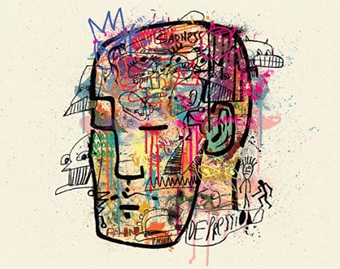
For many men, ADHD is invisible. It is not just about distraction or disorganisation, it is about masking. Men learn early to copy what is expected, to perform competence and control even when they are struggling internally. They hide their sensitivity, their impulsivity, their confusion. They try to fit the mould – stoic, focused and capable – and in doing so, slowly lose sight of themselves.
This constant self-editing creates an enormous emotional toll. Behind the mask often lies anxiety, isolation and an inner critic that never switches off. Every social misstep, every forgotten appointment, every misunderstood cue becomes evidence of failure. And because society rarely sees ADHD in men as a difference – more often as laziness, carelessness or immaturity – the shame deepens.
James’s life was full of these quiet battles. He was successful on paper but perpetually disconnected – from others, from his body, from himself. When he spoke about his mind, it was as if he lived in fast-forward: ideas, sensations and emotions all arriving at once. He could hyperfocus for days, or spiral into obsessive loops about one mistake from years ago. His energy was high-octane, his sensitivity acute, and yet he felt perpetually out of sync with the world around him.
Therapy for ADHD in Men – Integration Over Fixing
Our work together was not about “curing” ADHD or turning it into a superpower. It was about integration – learning to live with it rather than against it. We spent time mapping his patterns, noticing when he became over-focused, when shame took over, when his body checked out. We gave names to these states so they could be recognised, not just endured.
Over time, he began to see his difference more clearly, not as a flaw, but as a particular rhythm of being. His restlessness became something to manage, not hide. His sensitivity became a source of empathy. His intensity, when understood, could be channelled instead of burning him out.
Therapeutically, the work was also relational. It was about creating a space where he did not need to perform, where he could show up unmasked, fragmented and still be met. That kind of acceptance can be transformational for men with ADHD. It says: You do not have to earn belonging by being less of yourself.
ADHD is not, for everyone, a superpower or a disability. For many, it is simply a way of being that demands understanding and care. It can bring enormous creativity, energy and insight, but also exhaustion, confusion and shame. The key is integration: recognising the patterns, naming them and learning how to live with them compassionately.
Belonging From the Inside Out – Redefining Connection
For James, that meant slowing down enough to listen to himself, to his mind, his body, his emotions. It meant unlearning the lifelong reflex to mask difference, and instead, to inhabit it. In that space, something softer emerged: not a fixed self, but an honest one.
Men with ADHD often live at the edge – between belonging and alienation, control and chaos. Yet when they begin to see their difference not as defect but as identity, a new kind of connection becomes possible. Not with the tribe that once excluded them, but with themselves, and that, perhaps, is where belonging truly begins.